Ten days in Zanzibar is the length where the island stops being a single trip and becomes two. You get the full Stone Town treatment, then two beaches that feel nothing alike, with the big day trips slotted in between and no need to choose between them. Here is the plan day by day, with where to base yourself, the honest transfer times, and where it bends if you want to add a mainland safari or the diving island of Pemba.
The move that makes 10 days in Zanzibar work is splitting the beach time across two coasts. You start on the east or southeast, where the lagoon walks out at low tide and the wind pulls kitesurfers, then cross to the north, where the sea stays deep and swimmable whatever the tide is doing. Two nights of culture up front, then a long unbroken stretch of beach, and you leave having seen the island’s range without living in a transfer van.
The 10-day plan at a glance
The default here goes east first, then north, because it puts Jozani Forest on the drive out to the first beach and saves the swim-anytime north for the back half. You can flip the order, but the Jozani stop makes more sense heading south.
Day
Base
The day in short
1
Stone Town
Land, transfer into town, sunset and the Forodhani night market
2
Stone Town
Old town on foot, an afternoon spice farm
3
East coast
Jozani Forest en route, settle into Paje, first swim
4
East coast
Low-tide reef walk, a kite lesson or lagoon time
5
East coast
Lunch at The Rock, or an early Kizimkazi dolphin trip
6
East coast
A full beach day, or a Safari Blue dhow day
7
North coast
Cross-island transfer to Nungwi or Kendwa, first swim
8
North coast
Mnemba snorkeling, or a dive off the northeast
9
North coast
A sunset dhow, the turtle sanctuary, a slow day
10
Home
Slow morning or a short Stone Town stop, then the airport
That is nine nights on the ground: two in Stone Town, four on the first coast and three on the north. Most long-haul flights hand you a tenth night, and if yours does, add it to whichever coast you liked more, which lands the clean split of two, four and four.
Days 1 to 2: Stone Town
Fly into Abeid Amani Karume International (ZNZ), about five kilometres south of the city, and transfer into Stone Town in roughly 15 minutes for about US$10 to 15 (2026, verify). Two nights here is the right dose. It is enough to see the old town properly and eat well, and it gets the history in while you are fresh and near the airport, before the beach slows you right down.
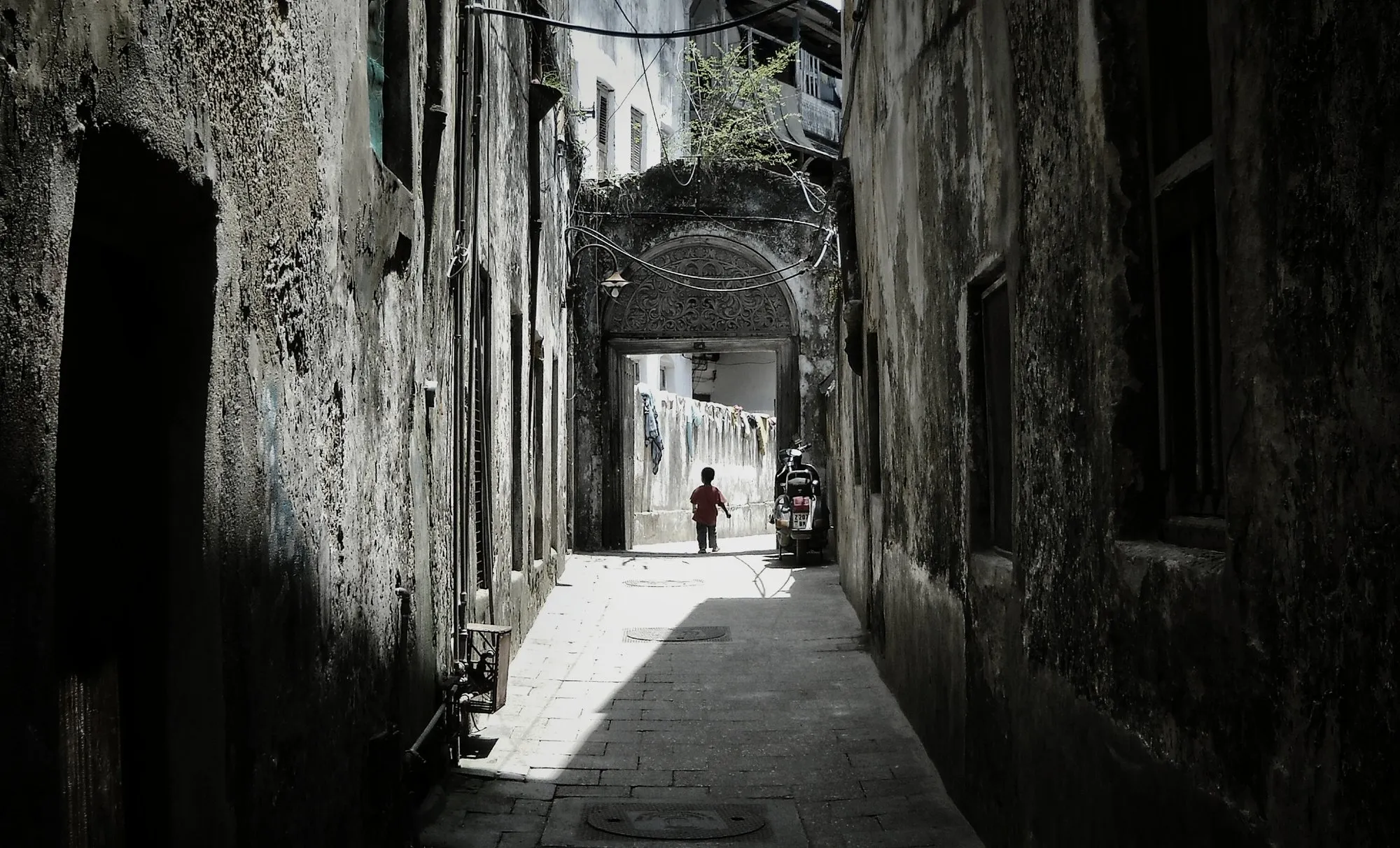
Day one is for arriving gently. Drop your bags and wander. Stone Town is a UNESCO-listed maze of coral-stone alleys, carved doors and old merchant houses, and getting mildly lost is how you see it. Take sunset from a rooftop or the seafront, then graze the Forodhani Gardens night market, where stalls grill seafood, fold Zanzibar pizza and press sugarcane juice each evening. Eat what is cooked in front of you.
Day two starts with a guided morning walk, which earns its small fee because the history hides in plain sight. You take in the Old Fort, the former slave market and the Anglican cathedral built on its site, the markets, and the house that marks Freddie Mercury’s birthplace. You will pass the House of Wonders on the seafront; it partly collapsed in 2020 and is under long-term reconstruction, so you view it from outside. Keep the afternoon for a spice farm in the countryside 20 to 30 minutes out, two to three hours of crushing clove leaves and tasting raw cinnamon, vanilla and fruit you have never seen, for about US$15 to 25 per person (2026, verify). Our spice tour guide has more.
One admin note before you fly: most visitors need a Tanzania eVisa in advance, and every non-resident also has to buy the mandatory Zanzibar inbound insurance (ZIC, about US$44 per adult in 2026, verify before travel), which is a separate entry requirement from your own travel cover. Sort both online to skip the airport queues; our Zanzibar visa guide explains it.
Day 3: To the east coast, via Jozani
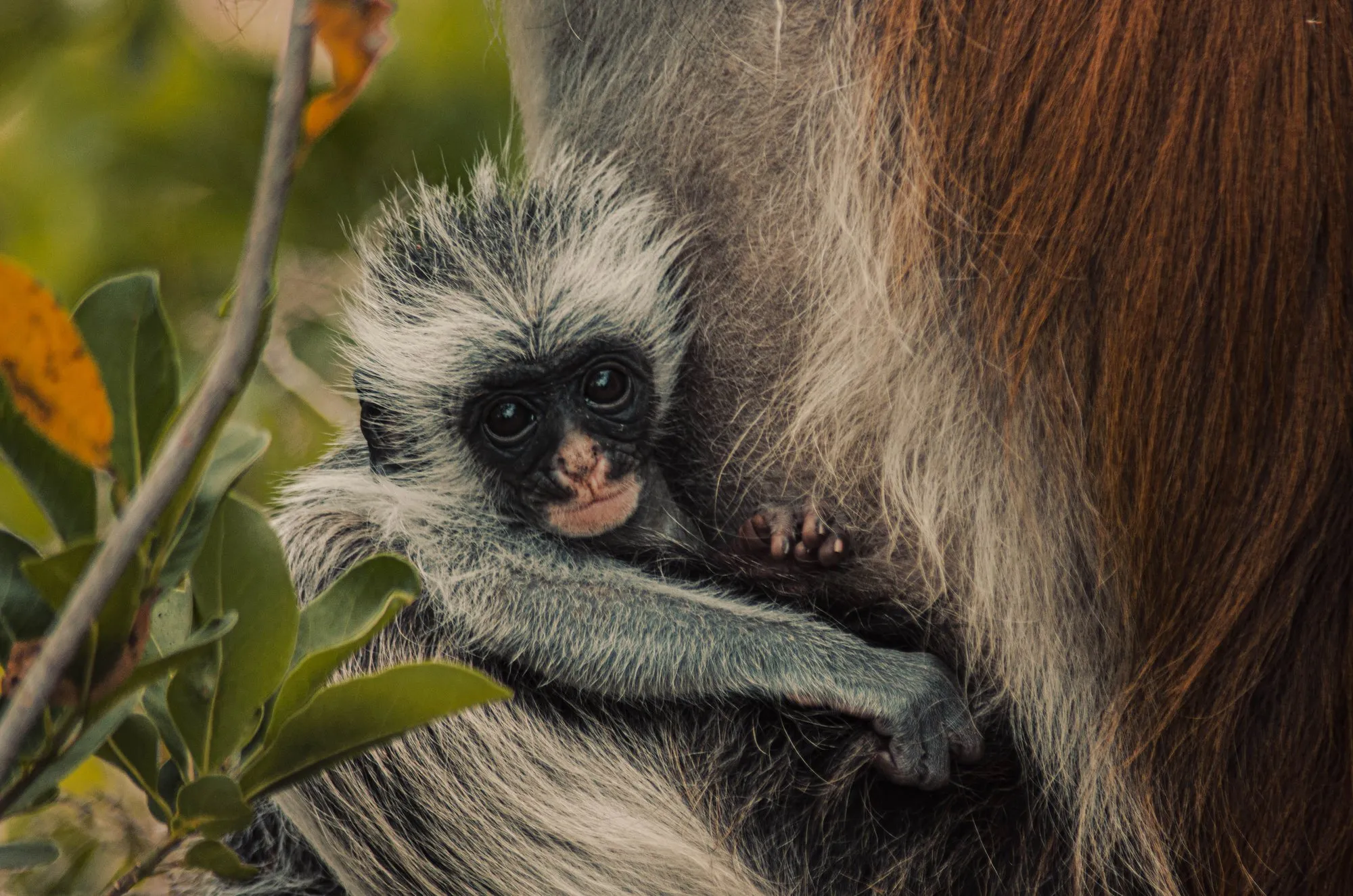
Transfer to the east or southeast coast, and time it to stop at Jozani Forest on the way, since it sits on the road south. It is Zanzibar’s only national park and the one place on Earth to see the endemic red colobus monkey, which is used enough to people that you get close. A short guided loop through the trees and a mangrove boardwalk takes an hour or two, for about US$10 to 12 including a ranger (2026, verify). Go and you have ticked the island’s easiest wildlife win before you reach the sand.
Carry on to Paje, the busy, kite-friendly hub on a wide, shallow lagoon, or Jambiani just south, a quieter fishing and seaweed-farming village with a slower feel. The airport to this coast is about an hour and US$35 to 45 (2026, verify). Settle in and get your first swim, timed to the tide. Reef-focused snorkelers can base a little further north at Matemwe instead, which faces Mnemba Atoll, though it puts you further from the kite lagoon and the southern dolphins.
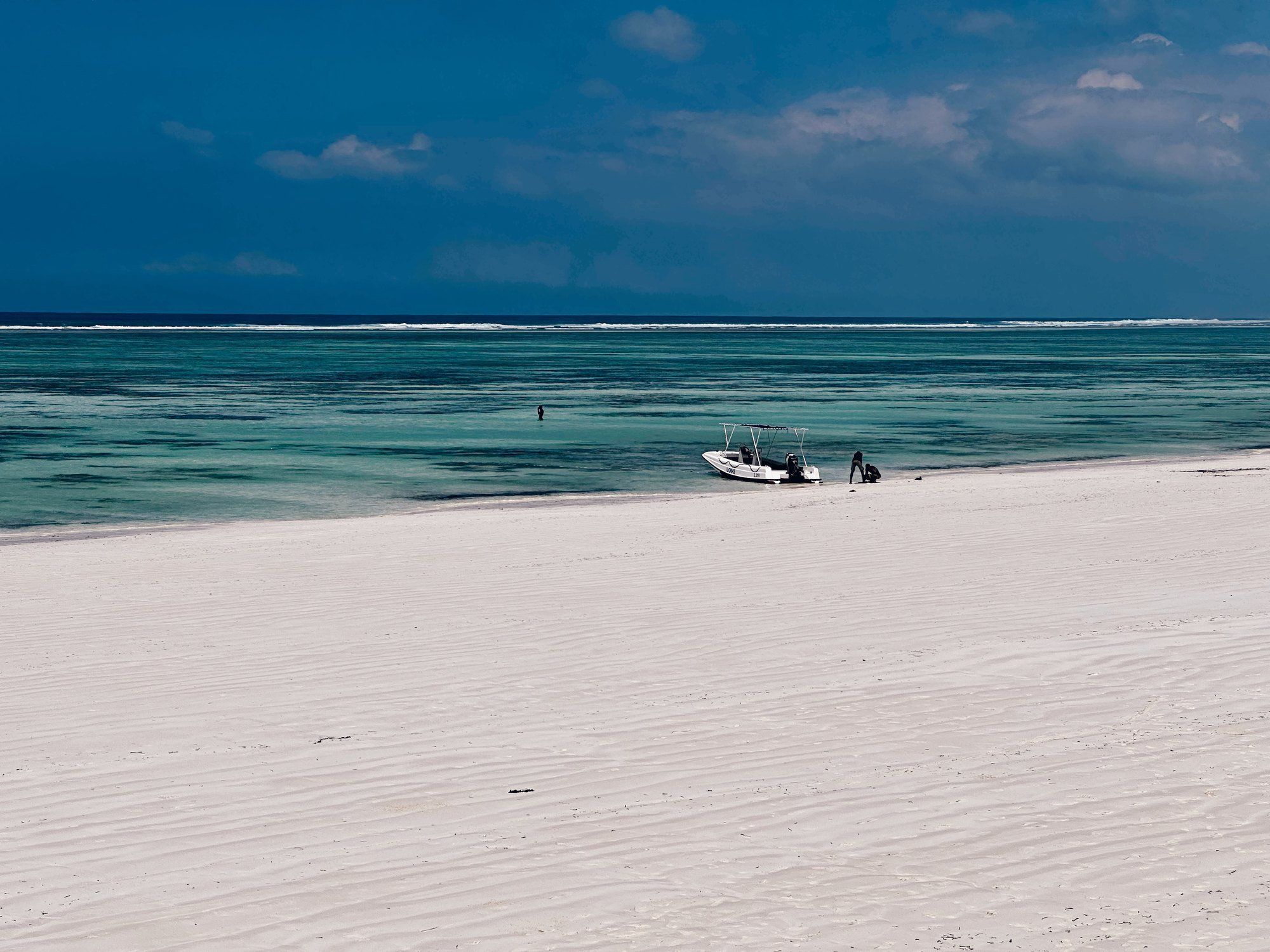
The east coast has one honest catch: the tide swings hard. At low tide the sea withdraws hundreds of metres, exposing reef flats and the seaweed plots local women farm. It is beautiful and worth walking, but if you want to swim on demand, book a place with a pool and keep a tide table handy. This coast also catches the most beach-cast seaweed, heaviest from roughly December to March (2026, verify), which is one more reason to pair it with the always-clear north rather than spend all ten days on one side. The beaches overview lays out the coast-by-coast tide and seaweed picture.
Day 4: Settle into the lagoon
Take a day to do very little. Swim on the tide, read, eat well. When the sea is out, walk the reef flat: it turns into a world of tide pools, starfish and seaweed farms, one of the quiet pleasures of this coast that no one photographs.
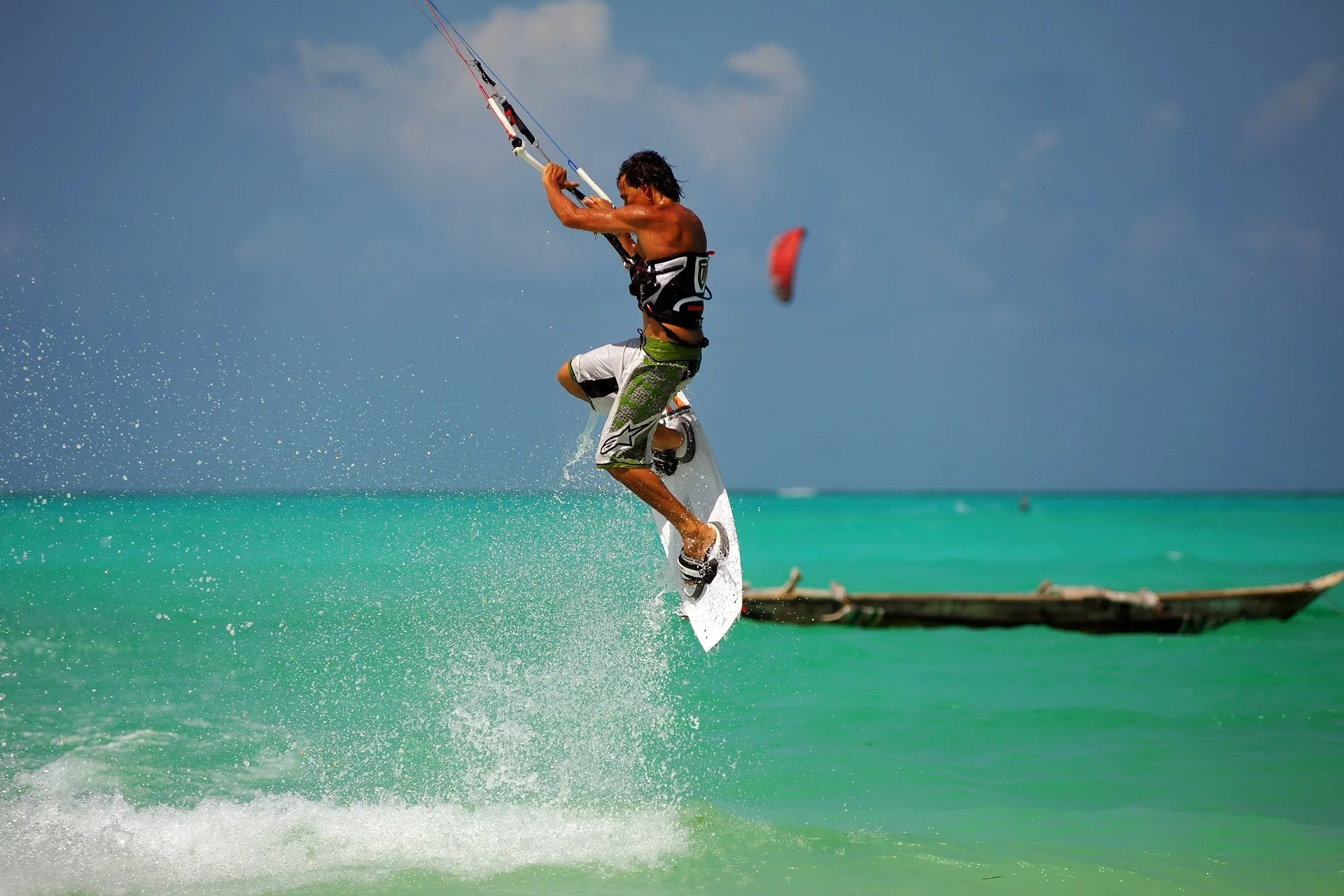
If you are in Paje and the wind is up, book a kitesurfing lesson. This is the island’s kite capital, with steady trade winds in two windows, roughly June to September and mid-December to March, and beginners do well on the flat, shallow lagoon. If kiting is not for you, the same water is fine for lazy floating at high tide and long walks at low.
Pick your standout for the middle of the east-coast run. One option is lunch at The Rock, the restaurant built on a coral outcrop in the sea off Pingwe, about 30 to 45 minutes north on the Michamvi peninsula. You reach it on foot at low tide or by boat when the water is up. You are paying for the setting more than the plate; a full meal runs about US$60 to 90 per person (2026, verify), and a reservation with a small deposit is essential, days ahead in low season and a week or two in high.
The other option is an early Kizimkazi dolphin trip on the south coast, about 45 minutes to an hour from Paje. Wild bottlenose dolphins live in Menai Bay year-round. Go at dawn when the pods feed, and, this matters, choose an operator that keeps its distance and moves parallel rather than chasing the animals, because done badly it is a scrum of boats around a stressed pod. Shared trips run about US$15 to 30 per person (2026, verify). Either way, keep the afternoon for the beach.
Day 6: A big boat day, or an easy one
By now you have earned a slow day, so if the beach is enough, stay on it. If you want one more adventure before you move on, Safari Blue is the island’s best all-day dhow trip: sailing, snorkeling, a sandbank stop, a mangrove lagoon swim and a long seafood lunch, for about US$80 to 120 per person (2026, verify). It launches from Fumba in the southwest, so from the southeast it is a longer drive, up to about two hours each way. If a full day on the water matters more than an easy one, it is worth the early start.
Day 7: Cross the island to the north
This is the transfer that earns its keep. Pack up and cross to the north coast at Nungwi or Kendwa, about two hours and US$50 to 80 from the southeast (2026, verify). It eats most of a day, which is exactly why you would not attempt two beaches on a shorter trip, but with ten days you have the room to do it well.
The reward is a coast that feels nothing like the one you left. The far north tip has almost no tidal swing, so you can walk into deep water at any hour without checking a tide table. Nungwi has the liveliest scene and the easiest access to boat trips, though it is also the island’s most developed beach, so if you want quiet over buzz, Kendwa next door is calmer and known for its sunsets. Get in for a first swim and let the pace change. Our Nungwi and Kendwa guides cover where to stay.
Day 8: Mnemba, or a dive
Give one day to the water. The northern standout is snorkeling around Mnemba Atoll off the northeast, the clearest, fishiest reef near the main island, with turtles and the odd dolphin. Book the early boat, though, because by mid-morning the popular patches can have a dozen boats on them. The island in the middle is a private lodge, so you snorkel the surrounding marine conservation area rather than landing. Half-day trips run about US$40 to 90 per person plus a government reef fee of about US$10 per adult (2026, verify), and boats leave from Matemwe, roughly 40 minutes from Nungwi by road.
If you would rather go under, Zanzibar is one of the friendlier places to learn to dive, with warm water and short boat rides, and the reefs off Mnemba are the pick. Expect easy reef diving rather than big walls and currents. Our diving guide covers the sites and seasons.
Day 9: A sunset dhow, and a slow day
Take your foot off the accelerator. The north has easy wins that need no planning: the turtle sanctuaries near Nungwi, where rescued green turtles swim in a tidal pool for about US$10 per person (2026, verify), the dhow builders at work on the sand, and a sunset dhow cruise, which is cheap, gentle and one of the nicer hours of any Zanzibar trip. If you skipped a day trip earlier or the weather moved one, this is the spare day to use it. Otherwise, do nothing, well.
Breakfast, one last swim, and leave real margin for the airport. From the north it is an hour to an hour and 20 back to ZNZ, and the road can be slower than the map suggests, so for a morning flight plan the drive the night before. If your flight is late and you want a last look at Stone Town, you can route through town for a couple of hours, though it is a detour rather than a straight line. For an early departure, go straight to the airport.
Variation one: add a mainland safari
Ten days is the shortest trip that pairs Zanzibar with a proper mainland safari without shortchanging either. The usual move is to trim the beach to a single coast, say four or five nights instead of the full eight, and give the freed days to the northern circuit: the Serengeti, the Ngorongoro Crater or Tarangire, reached by a short flight from Zanzibar to Arusha or a bush airstrip. Two nights on safari is a taste; three lets you slow down. If the safari is the real reason for the trip, do it first and finish on the beach, so you end on the easy part. Our safari and Zanzibar itinerary lays out the pairing, the flights and the order to do them in.
Variation two: add Pemba
Zanzibar’s quieter sister island, Pemba, sits a short flight north, roughly 30 to 45 minutes on a regional carrier (2026, verify). It is greener, far less visited, and the diving is a clear step up: walls, drift dives and the clearest water in the region, which serious divers rate above anything on the main island. Two or three nights suits it. The trade-off is that Pemba has little in the way of nightlife or big resorts, so it rewards divers and people who want seclusion more than variety. If that is you, drop the north-coast leg and fly to Pemba instead; our Pemba Island guide covers the diving, how to get there and where to stay. For everyone else, the two-coast plan above is the better use of ten days.
What 10 days in Zanzibar costs
Set international flights aside, since those depend on where you are coming from. On the ground, a mid-range trip runs about US$100 to 250 per person per day in 2026: a boutique or three to four star room, private transfers, several tours and meals out. Over ten days that is roughly US$1,000 to 2,500 per person. Budget travellers on guesthouses, shared transport and local food manage US$40 to 70 a day; a five-star or private-island stretch runs well past US$350 a day. Adding a mainland safari changes the maths, since safari lodges and park fees are expensive, so budget that leg on its own. Carry enough cash, since the island runs largely on it and ATMs can be unreliable; US dollars are widely accepted if the notes are crisp and dated 2009 or later. The full breakdown is in our money and costs guide.
Getting around, and when to go
Distances are short but the driving is slow, which is why the plan clusters activities near each base and gives the two-hour cross-island move its own day. Most hotels arrange fixed-price transfers, the easiest option; taxis have no meters, so agree the fare first; and there is no reliable Uber or Bolt on the island. Our getting around Zanzibar guide covers transfers, taxis and dala-dalas, and getting to Zanzibar covers flights and the ferry from Dar es Salaam.
On timing, June to October is dry, breezy and cooler, and December to February is hot with the calmest, clearest sea, which is also the best window for Mnemba and diving. April and May bring the long rains and the lowest prices. The best time to visit guide has the month-by-month detail.
More than enough, and it is arguably the ideal length if you want two beaches or a safari on the side. Ten days gives you two nights in Stone Town for the history and the food, then a proper unhurried stretch on two contrasting coasts, an east-coast lagoon and the swim-anytime north, with room for the big day trips like Jozani Forest, Mnemba snorkeling, a Kizimkazi dolphin trip and Safari Blue. If you would rather not move hotels, you can happily spend all the beach time on one coast and use day trips instead. The main reason to want more than ten days is to add a longer mainland safari or a Pemba diving trip.
What's the best 10-day route?
Land and spend two nights in Stone Town while you are near the airport, doing the old town on foot and an afternoon spice farm. Then transfer to the east or southeast coast, stopping at Jozani Forest on the way since it sits on the road south, and settle into Paje for four nights of lagoon, kitesurfing, The Rock and the Kizimkazi dolphins. Around day seven, cross the island to the north coast at Nungwi or Kendwa for the last few nights, where the sea is swimmable at any tide and Mnemba snorkeling is close. Keep the final morning for a last swim before the airport run. You can run it in reverse, but starting on the east lets you fold Jozani into the drive out.
Should I add a safari to 10 days?
Ten days is the shortest trip that fits a real mainland safari without rushing the island. To make room, trim the beach to a single coast and give two or three days to the northern circuit, the Serengeti, Ngorongoro or Tarangire, reached by a short flight from Zanzibar. Two nights is a taste; three lets you slow down. If the safari is the main event, do it first and finish on the beach so you end on the relaxing part. Budget it separately, since safari lodges and park fees cost far more per day than Zanzibar does. Our safari and Zanzibar itinerary walks through the pairing.
How many beaches in 10 days?
Two is the sweet spot, and ten days is the first itinerary long enough to make a beach change worth the transfer. The natural split is roughly four nights on the east or southeast coast, for the lagoon, kitesurfing and the southern day trips, then three or four on the north for swim-anytime water and the sunsets. Three beaches is possible but rarely worth it, since each move costs the best part of a day and you spend the trip packing. If you would rather not move at all, pick one coast and reach the rest by day trip.
How much does 10 days cost?
For 2026, a mid-range trip runs about US$100 to 250 per person per day once you are on the island, so roughly US$1,000 to 2,500 per person for ten days, not counting international flights. That covers a boutique or three to four star room, private transfers, several tours and meals out. Budget travellers using guesthouses and shared transport spend far less, around US$40 to 70 a day; luxury resorts run well past US$350 a day. A mainland safari is a separate, pricier line item, so budget it on its own. Verify current prices before you book.
Jozani Forest is Zanzibar's only national park and the one place on Earth to see the endemic red colobus monkey. Entry is about US$10 to 12 per adult (2026, verify), a park ranger is included, and a guided visit takes one to two hours across a forest loop and a mangrove boardwalk. It sits in the centre-south of Unguja, on the main road to the east coast beaches.
Mnemba Island is a tiny private island off Matemwe on Zanzibar's northeast coast, ringed by the best coral reef near Unguja. You cannot land on it, but boat tours snorkel and dive the surrounding marine conservation area, full of turtles and reef fish. Access needs a marine fee of about US$10 per adult (2026, verify) plus a boat trip of roughly US$40 to 90 per person, usually from Matemwe.
The Rock is Zanzibar's most photographed restaurant, a table-topped coral rock in the sea off Pingwe beach on the Michamvi peninsula. Reach it on foot at low tide, by boat at high tide. Booking is essential, with a non-refundable US$10 per person deposit (2026, verify) taken off your bill, and a full seafood meal runs roughly US$60 to 90 per person. You pay for the setting, not the cooking.