
The Best Beaches in Zanzibar (and Which Side to Choose)
North or east, swim-anytime or tide-dependent, seaweed season and the right beach for swimmers, couples, families and kitesurfers.
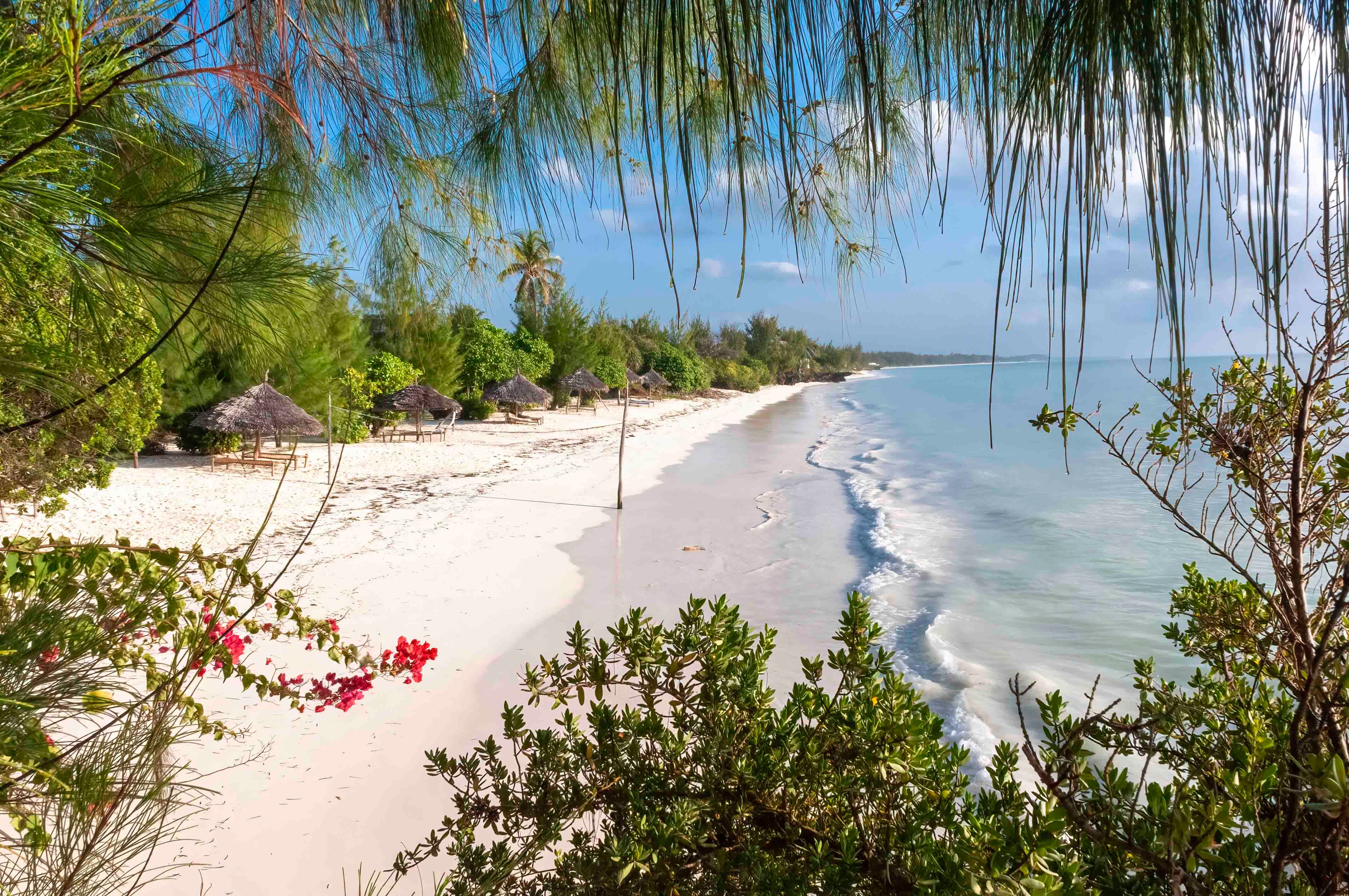
Zanzibar’s best beaches split by coast: the north (Nungwi, Kendwa) is lively and swimmable at any tide, while the east and southeast (Paje, Jambiani, Matemwe and the peninsulas) is wider, quieter and more photogenic but tide-dependent, with a seasonal drift of seaweed. Pick by whether you want swimming, kitesurfing, snorkelling or calm.
There is no single best beach on the island, only the right one for how you want to spend your days. The decision that matters most is which coast, because Zanzibar’s two sides behave completely differently once the tide goes out. Below is every main beach laid side by side, then the honest detail behind each column so you can choose with your eyes open.
Zanzibar’s beaches compared
Seven beaches carry most of the island’s tourism, and they sort by coast: two in the swim-anytime north, one on the tranquil northeast, and four along the wide, tide-ruled east and southeast. Here they are side by side on the facts that decide most trips: the coast, whether you can swim at low tide, and who each one suits.
| Beach | Coast | Sea at low tide | Best for |
|---|---|---|---|
| Bwejuu Beach | southeast | Recedes at low tide | couples, quiet, relaxation |
| Jambiani Beach | southeast | Recedes at low tide | budget, slow-travellers, culture |
| Kendwa Beach | north | Swim at any tide | couples, sunsets, nightlife |
| Kiwengwa Beach | east | Recedes at low tide | families, all-inclusive, package-resort |
| Kizimkazi Beach | south | Recedes at low tide | dolphin-tours, quiet, nature |
| Matemwe Beach | northeast | Recedes at low tide | snorkelers, divers, couples |
| Michamvi & Pingwe | southeast | Recedes at low tide | honeymooners, couples, luxury |
| Nungwi Beach | north | Swim at any tide | swimmers, couples, groups |
| Paje Beach | southeast | Recedes at low tide | kitesurfers, digital-nomads, backpackers |
| Pongwe Beach | east | Recedes at low tide | couples, honeymoon, quiet |
| Pwani Mchangani Beach | northeast | Recedes at low tide | couples, families, quiet |
| Uroa Beach | east | Recedes at low tide | couples, resort-goers, quiet |
The rest of this guide is the honest detail behind that table: which side suits you, what the tide really does, when the seaweed shows up and clears, where the water runs clearest, the airport transfer for each coast, and the best beach for each kind of trip.
North coast or east coast: which side has the best beaches
Almost everyone booking Zanzibar is really choosing between two coasts, and the honest answer is that neither is better, they are built for different holidays.
The north tip, where Nungwi and Kendwa sit, has deep water close in and barely any tide. You can swim straight off the sand at any hour, the beaches are busy and social, and the coast faces roughly west, so you get sunsets over the sea. This is the side for people who want to get in the water on their own schedule and have bars, dive centres and boat trips a short walk away. The trade-off is that it is the least quiet and, in high season, the most built up part of the island.
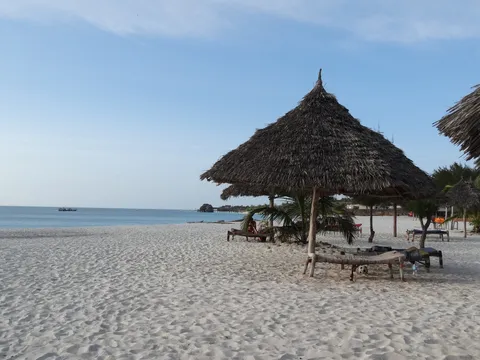
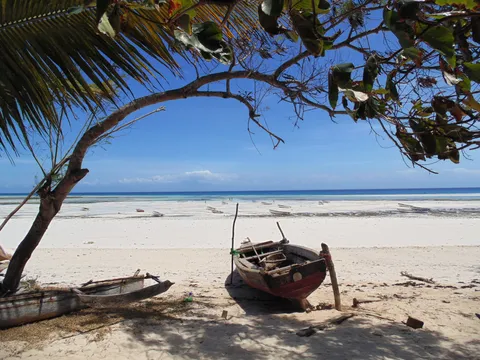
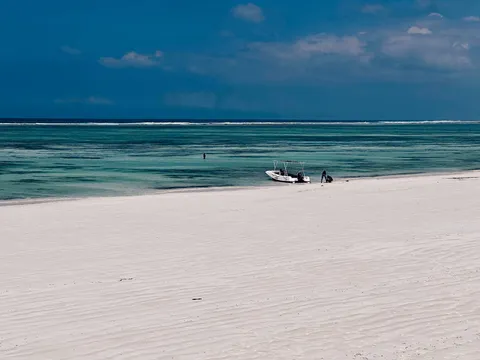
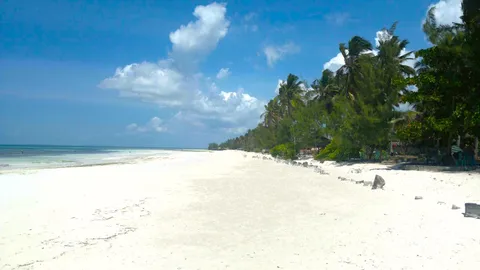
The east and southeast, from Matemwe down through Kiwengwa, Paje, Jambiani and the Michamvi peninsula, is where the classic postcard sand lives: broad, bright white, and often close to empty. The water glows over the shallow lagoon and the reef keeps the sea flat, which is why kitesurfers and snorkellers head here. The catch is the tide, which pulls the sea a long way out twice a day, and a seaweed season on the reef flat. If you want space, a slower pace and photos without crowds, this is your coast, as long as you are happy to plan around the water.
So: north for reliable swimming and life, east for width, calm and quiet. If you cannot decide, many people split a week, three or four nights on each coast, and get both. Our where to stay guide breaks down the hotels on each side.
The tide is the thing to plan around
This is the single fact that changes a Zanzibar trip, and it is the one most guides bury. Zanzibar has a large tidal range, and the two coasts handle it in opposite ways.
On the north tip, Nungwi and Kendwa have very little tidal movement. The seabed drops away quickly, so the water stays deep and swimmable whatever the clock says. If swimming on demand is your priority, start here, and the Nungwi beach guide and Kendwa beach guide cover where to base yourself.
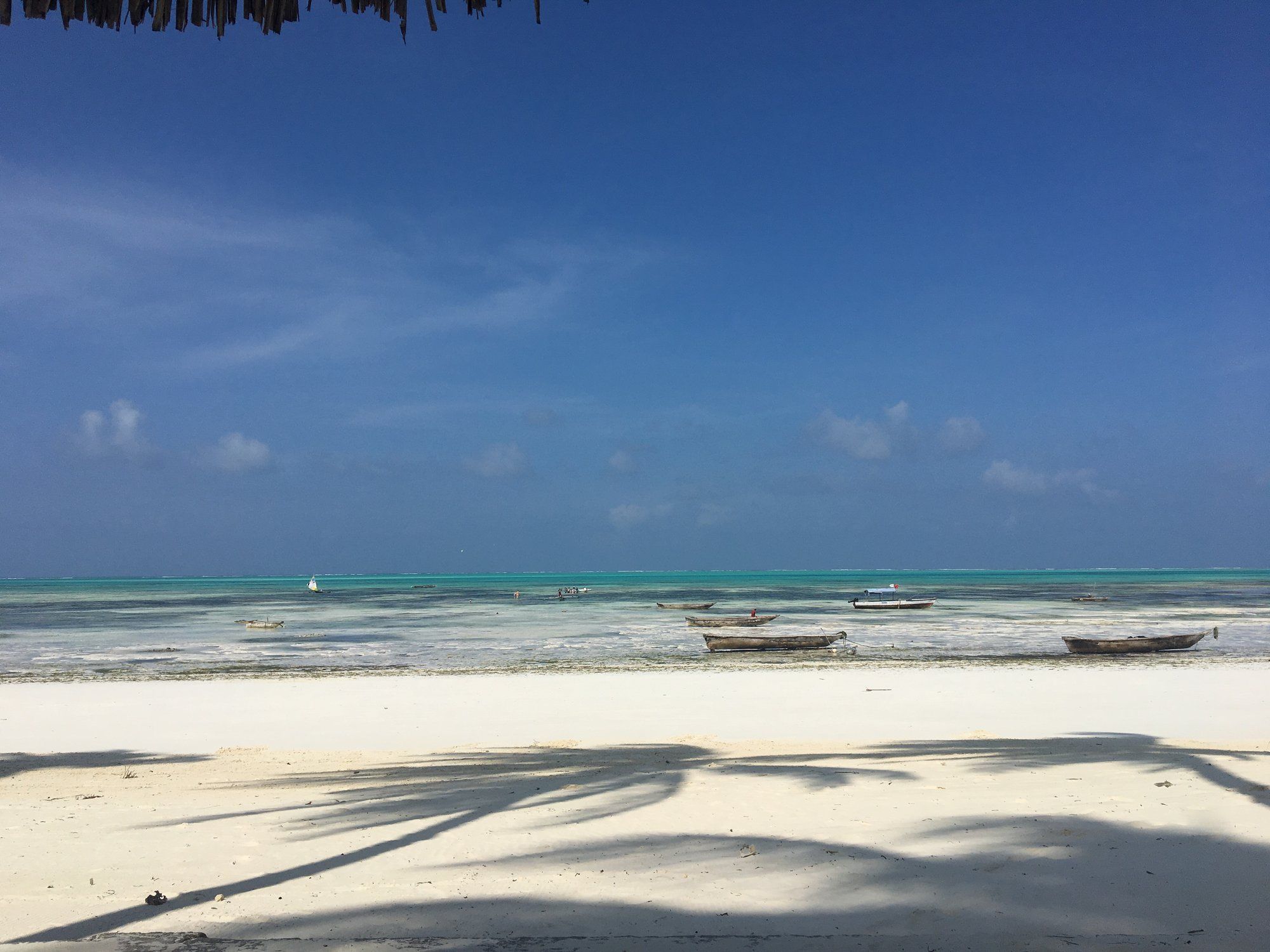
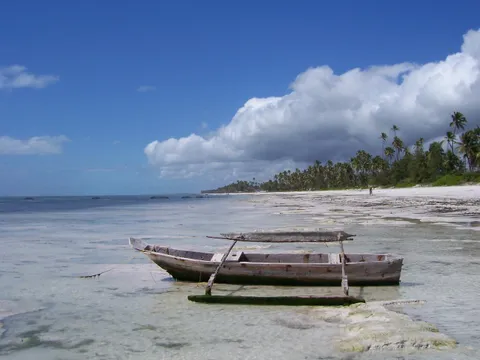
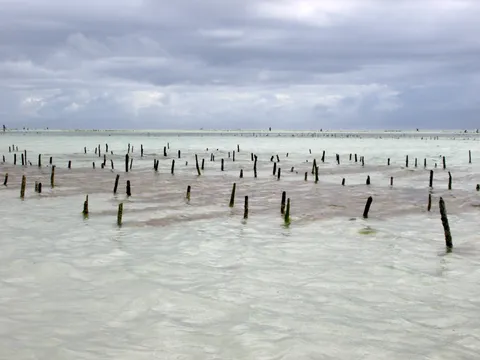
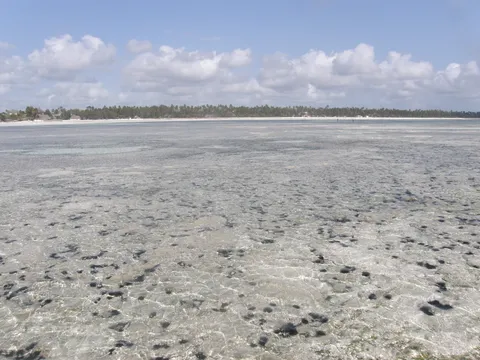
On the east and southeast, the beaches sit behind a broad, shallow reef shelf. At low tide the sea withdraws hundreds of metres, sometimes close to a kilometre, exposing wet sand, reef flats, tide pools and the seaweed farms. It is a genuinely interesting scene, women wading out to tend their plots, kids playing football on the flats, and it is why the kite lagoon is so flat and safe. But if you arrive at low water expecting to dive straight in, you are looking at a long walk to knee-deep sea instead.
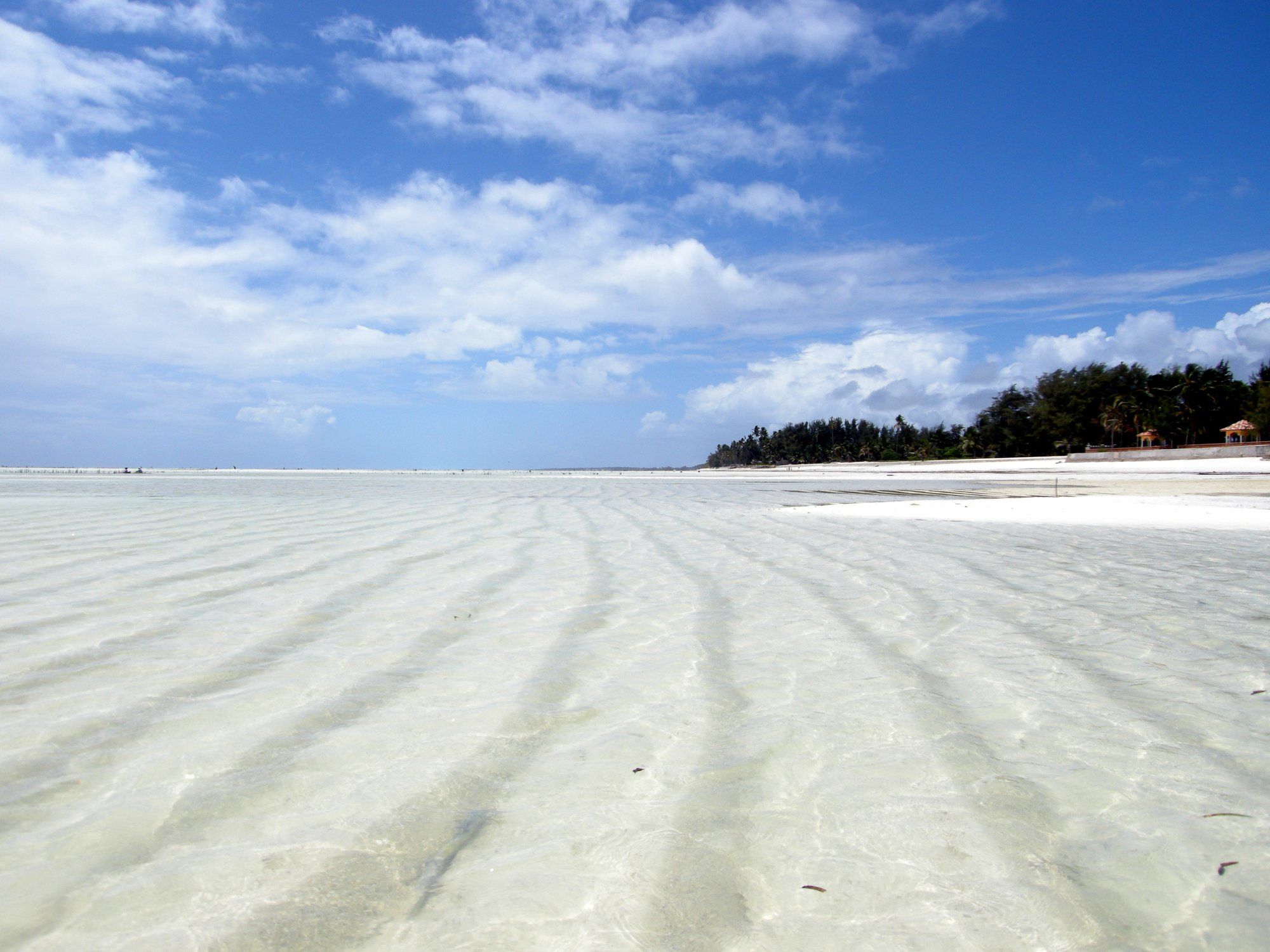
The fix is simple once you know the pattern. Check a tide table for your dates, plan swims and boat trips for the incoming and high tide, and pick a hotel with a pool for the low-tide gaps if all-day water access matters to you. The tide runs on the moon, not the calendar, so no month escapes it; high and low simply shift a little earlier each day. For how the tide sits alongside heat, wind and rain across the year, see our best time to visit guide.
Seaweed season, and where it actually shows up
Seaweed is the other thing people worry about after seeing a bad photo online, and the reality is more manageable than the panic. It is seasonal, it is mostly eastern, and it is tied to a real local industry.
The east and southeast reef flats grow seaweed naturally, and communities at Paje, Jambiani, Bwejuu and along the east coast farm it in tidy plots, a livelihood run largely by local women, the Seaweed Mamas. Those farmed plots sit exposed at low tide year-round, part of the working landscape. What actually varies by season is the loose drift weed that washes onto the sand: it is heaviest roughly December to March, when the Kaskazi wind pushes it ashore, and cleanest from June to October. The Paje and Jambiani beaches, where the farming is most active, show it most.
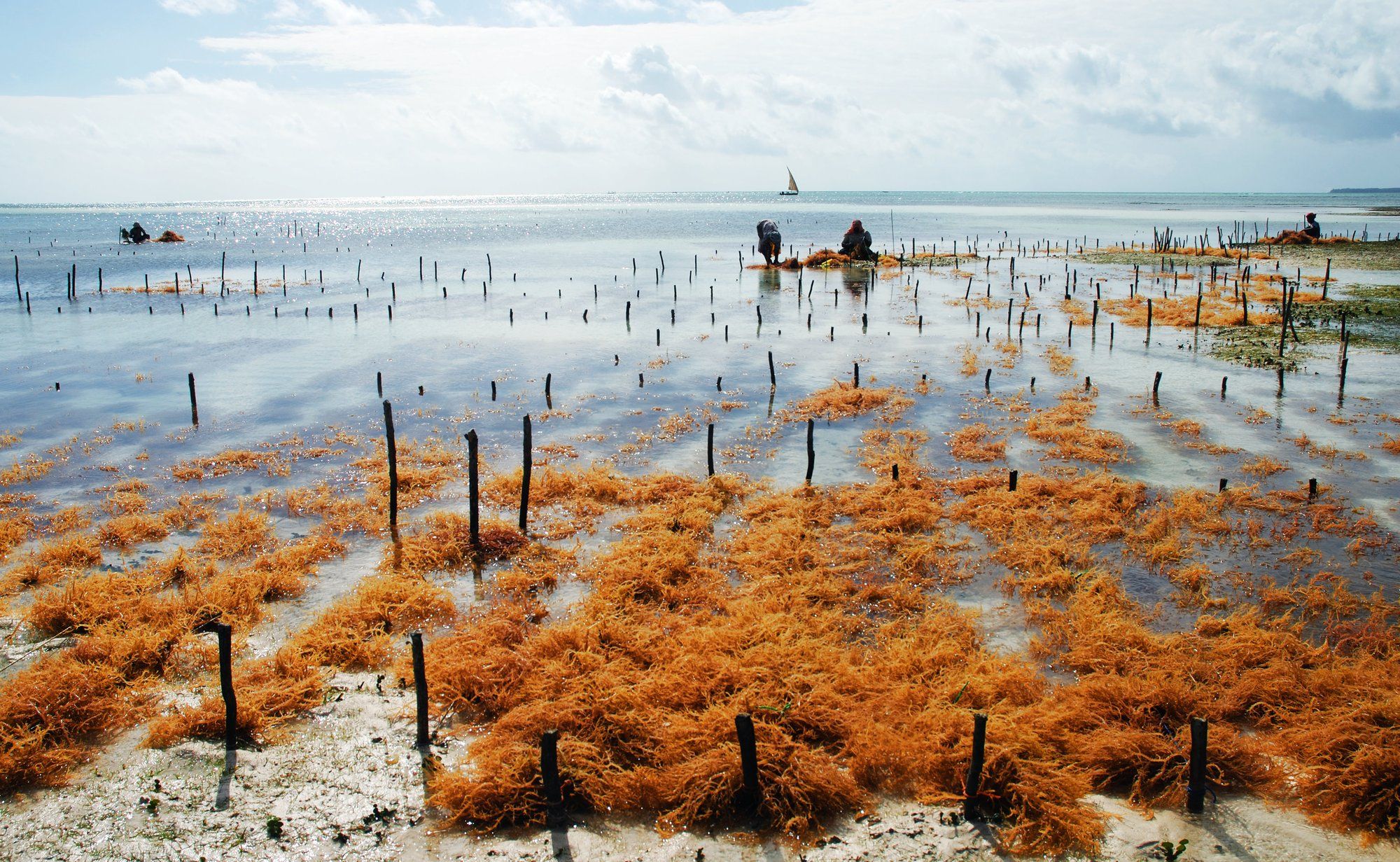
Two things keep it from spoiling a trip. First, the north beaches, Nungwi and Kendwa, get very little drift seaweed at all, so if it bothers you, base there. Second, on the east coast the resorts rake the tideline each morning and swimming happens on the higher tides when the weed is underwater. There is a neat trade-off worth knowing: the calm, clear-sea months of December to March are also when the beach drift seaweed is heaviest, while the windier June to October stretch has choppier sea but the cleanest beaches. It has a smell at low water and is not a flawless brochure lagoon every hour, but it is a natural, seasonal feature of a working coast, not a reason to cross the east off your list.
Where the water is clearest
“Clear water” on Zanzibar is really a question of two things: how calm the sea is, and whether there is reef nearby to snorkel.
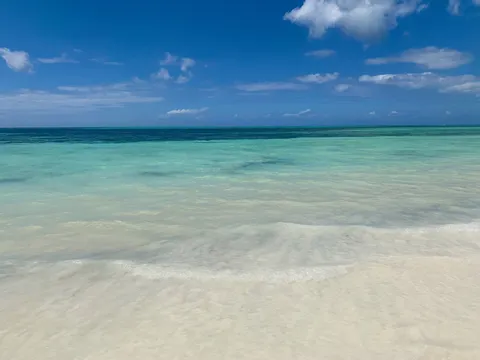
The calmest, clearest sea lines up with the low-wind months, roughly December to March and again in October, when the surface flattens and visibility opens up. The windier middle of the year, June to September, is superb for kitesurfing but chops up the surface and stirs the shallows, so the water can look less glassy on the exposed east coast.
For clarity with something to look at, the northeast around Matemwe faces Mnemba Atoll, the island’s best snorkelling and diving, where the reef drops into clear, fish-filled water just offshore. Kendwa in the north has deep, clear water right off the sand, good for a straight swim rather than a reef. And if pristine visibility is the whole point of your trip, Pemba, the quieter island a short flight north, holds the clearest water of all, with walls and drift dives that serious divers rate above anything on the main island. Our diving in Zanzibar guide covers the sites and seasons.
The best beach for what you want to do
The right beach depends on what you came for. Here is the shortest path to yours.
Swimming at any tide
Go north, to Nungwi or Kendwa. These are the only beaches where the sea stays deep and swimmable around the clock, so you are never watching a tide table to get wet. Nungwi is the livelier of the two; Kendwa, just to the south, is a touch calmer with better sunsets.
Couples and honeymoons
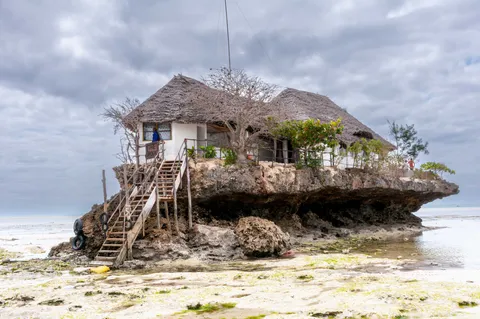
The Michamvi and Pingwe peninsula in the southeast is the quiet, exclusive pick, with only a handful of places to stay, and it is unusual for the east coast because its west-facing side catches the sunset over the water, so you get both sunrise and sunset from one headland. It is also home to The Rock restaurant, the famous table built on a coral outcrop in the sea. Matemwe suits couples who want calm plus a reef on the doorstep, and Kendwa works if you want romance with a bit more life nearby.
Families
The north wins for young children, because the swim-anytime water at Nungwi and Kendwa means the sea never disappears mid-afternoon, and both have the widest choice of hotels, restaurants and easy boat trips. If you prefer a big all-inclusive with a pool to cover the low-tide hours, the east-coast resort strip at Kiwengwa, the island’s densest run of large resorts after Nungwi, is built for exactly that.
Kitesurfing
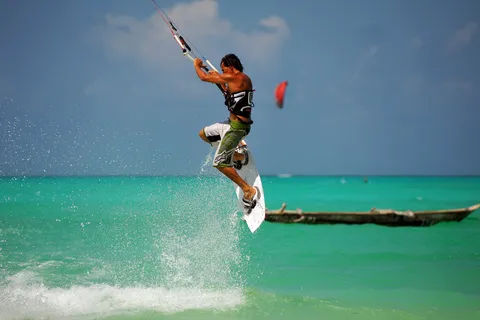
Paje is Zanzibar’s kite capital, and it is not close. The shallow southeast lagoon gives a flat, safe, waist-deep playground at the right tide, the trade winds are reliable in two long windows (roughly June to September and mid-December to March), and the town is stacked with kite schools and a young, easygoing crowd. Even if you do not kite, Paje is a fun, laid-back base. See the Paje beach guide for schools and stays.
Snorkelling and diving
Base at Matemwe on the northeast coast, directly opposite Mnemba Atoll, the launch point for the island’s best reef. Boats reach the atoll in minutes, the coral and fish are the healthiest around Unguja, and turtles and dolphins turn up often. For a wider swim and multiple dive sites, the north around Nungwi has plenty of operators too.
Nightlife and sunsets
Nungwi has the most going on after dark, with beach bars and sunset spots along the cape. Kendwa is famous for its full-moon parties and for sunsets that draw a crowd to the sand each evening. Both face west, so the sun sets over the sea, something the east coast beaches, facing the sunrise, cannot offer except from Michamvi’s western edge.
Which side is right for you
If you want one clear recommendation, match yourself to the line below and book that beach.
- Swim whenever, plus bars and boat trips: Nungwi (north). Lively, deep water at any tide, the most to do.
- Sunsets and a calmer north base: Kendwa (north). Same swim-anytime water as Nungwi, quieter, famous full-moon nights.
- Kitesurfing or a young, laid-back scene: Paje (southeast). The kite lagoon and the best budget-to-boutique buzz.
- Quiet, authentic village and low prices: Jambiani (southeast). Seaweed farming, fishing dhows, slow days.
- Snorkelling and the best reef: Matemwe (northeast). Facing Mnemba, calm and romantic.
- All-inclusive resort with kids: Kiwengwa (northeast). Big hotels, pools, easy package stays.
- Honeymoon calm and a sunset over the sea: Michamvi and Pingwe (southeast peninsula). Tiny, exclusive and upscale, The Rock next door.
First-timers who are not sure and just want a beach that works: pick Nungwi. You can swim any time, there is plenty to do, and getting there is straightforward. Once you know the island, the east and southeast reward you with more space and character.
Getting to the beaches and planning your trip
Every beach here is a road transfer from Abeid Amani Karume airport, just south of Stone Town on the west coast. The north beaches (Nungwi, Kendwa) are the longest run at about an hour and twenty minutes; the northeast (Matemwe, Kiwengwa) and southeast (Paje, Jambiani, Michamvi) are broadly similar or a little shorter. Most hotels arrange a fixed-price transfer, which is the easiest option, or you agree a fare with a taxi at the airport (roughly US$35 to US$70 one way depending on the coast, 2026). There are no reliable ride-hailing apps on the island, so do not count on Uber or Bolt.
To turn a coast into a booking, line up three things: the beach that matches how you want to swim, a hotel on that stretch, and the right month. Our where to stay guide sorts the hotels by area and budget, the best time to visit guide covers weather, sea and crowds month by month, and the things to do guide rounds up the tours, from Mnemba snorkelling to a spice farm and Stone Town, that turn a beach week into a proper trip. Get the coast right first, and the rest falls into place.
Explore each beach
Frequently asked questions
Which part of Zanzibar has the best beaches?
It depends on what you want. For swimming at any time of day, the north tip around Nungwi and Kendwa is the best, because the tide barely moves and the water stays deep. For wide, quiet, photogenic sand and water sports, the east and southeast coast (Paje, Jambiani, Matemwe, Michamvi) is hard to beat, as long as you plan swims around the tide. Nungwi is the easiest all-round pick for a first visit.
Are Zanzibar beaches swimmable?
Yes, but it varies by coast. On the north tip (Nungwi and Kendwa) you can swim at any tide, all day, all year. On the east and southeast coast the sea sits on a shallow reef shelf, so at low tide it can withdraw hundreds of metres, sometimes close to a kilometre, leaving reef flats and seaweed farms exposed. There you swim on the incoming and high tide, so check a tide table or pick a hotel with a pool.
Where is the clearest water in Zanzibar?
The water is clearest when the sea is calm, which is roughly December to March and again in October, when the wind drops. For clarity plus reef life, the northeast around Matemwe faces Mnemba Atoll, the island's best snorkelling, and Kendwa in the north has deep, clear water off the sand. Pemba island, a short flight north, holds the clearest water of all for serious divers.
Is there seaweed on Zanzibar's beaches?
Some, and it is seasonal and mostly eastern. On the east and southeast beaches (Paje, Jambiani, Bwejuu, Matemwe, Kiwengwa), farmers, mostly local women, grow seaweed in plots on the reef flat that sit exposed at low tide year-round. Separately, loose drift seaweed washes onto the sand seasonally, heaviest around December to March and cleanest from June to October. The north beaches, Nungwi and Kendwa, get very little. Resorts rake the tideline daily, so it is rarely a problem for a swim, just something you may see and sometimes smell at low water.
Which side is best, north or east?
Choose north (Nungwi, Kendwa) if swimming whenever you like, bars and boat trips matter most; the water is deep at any tide and the scene is livelier. Choose the east and southeast (Paje, Jambiani, Matemwe, Michamvi) if you want wider, quieter, more photogenic sand, kitesurfing or snorkelling, and you do not mind timing your swims to the tide. North is the easier first trip; the east rewards a bit of planning with more space.