A walkable guide to Zanzibar's UNESCO old city: the carved doors, Forodhani night market, the former slave market, the history and culture, and how long to give it.
Stone Town is Zanzibar’s UNESCO-listed old city, a walkable maze of coral-stone lanes, carved doors, spice markets and the town where Freddie Mercury was born. Give it at least half a day, and a full day if you want the history, the shopping and a Forodhani sunset too.
It sits on the west coast of Unguja, the main island, and it is the historic core of Zanzibar City. Most visitors arrive here first, because the airport and the ferry port are close, then move on to a beach. That is a mistake if you only pass through. Stone Town is the one place on the island where the story of Zanzibar is written into the buildings, and an afternoon on foot changes how you read the rest of your trip.
What to see in Stone Town
The old town is compact, so the main sights are all a short walk apart. Here is what to build a day around, with a rough idea of the time each takes.
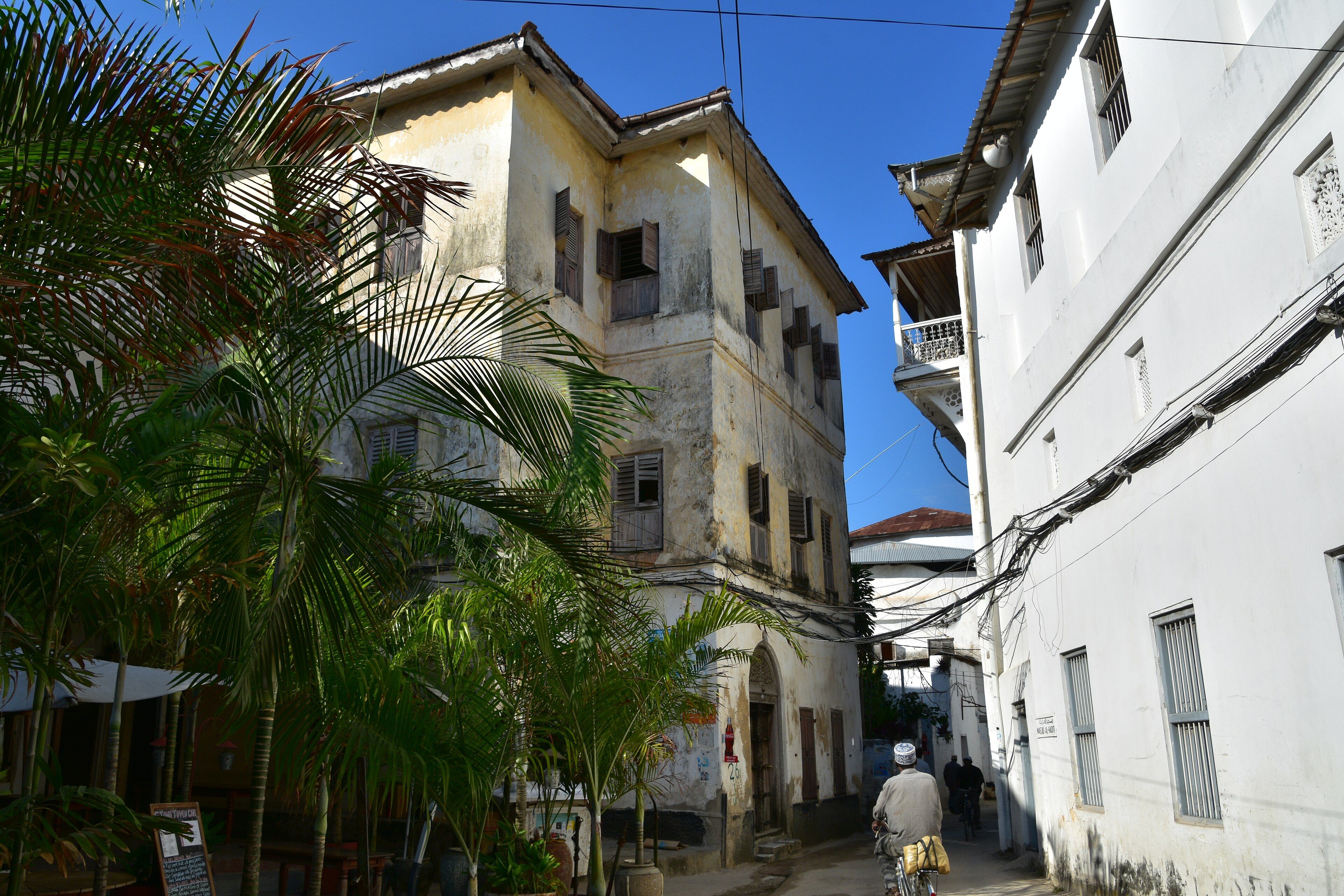
Start with the town itself. The best of Stone Town is the wandering: getting a little lost in the lanes, following the smell of cardamom and grilled corn, and stopping when a carved door or an open mosque doorway makes you. Ticking off monuments is beside the point. A guide is worth the money for a first walk, both for the history and because they steer you away from the pushier touts. Expect to pay about US$15 to 20 per person for a two to three hour guided walk (2026, verify).
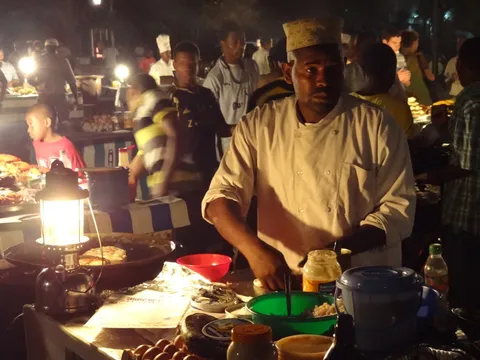
The Forodhani night market is the evening ritual: a run of stalls on the seafront gardens selling grilled seafood, Zanzibar pizza and fresh sugarcane juice, with the sunset behind the dhows. It is free to walk through, and you pay only for what you eat. The former slave market and Anglican cathedral is the opposite in tone, a sober and essential stop that tells the hardest part of the island’s history honestly. Music fans will want the small museum at Freddie Mercury’s house, which marks the Stone Town birthplace of the Queen frontman.
The UNESCO old city: coral-stone alleys and carved doors
UNESCO added Stone Town to the World Heritage List in 2000, calling it an outstanding example of a Swahili coastal trading town. The reason is the fabric of the place. The old town is built almost entirely from coral rag stone, quarried from the reef and rendered with lime, which gives the walls their soft, weathered, sand-coloured look. The lanes are narrow on purpose, to hold shade and channel the sea breeze, so walking them stays bearable even at midday.
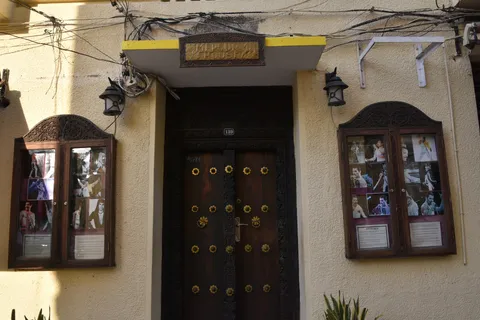
The carved wooden doors are the detail everyone remembers. There are said to be hundreds of them, and they come in two broad styles. The older Arab doors are rectangular with a heavy lintel and geometric or Quranic carving. The Indian-influenced ones have a rounded arch and rows of brass studs, a detail borrowed from Indian designs that once guarded against war elephants and stayed on as decoration. A door was a statement of a merchant’s wealth and faith, carved before the house behind it was even finished. Look for the frames while you walk; they are the free museum of Stone Town.
Alongside the doors you will pass old mosques, Hindu temples, the covered bazaars, and the 17th-century Old Fort, the Omani-built Ngome Kongwe, whose courtyard is now a cultural venue and amphitheatre you can wander into for free. Almost none of it is roped off. The whole town is the exhibit.
Zanzibar history, in one place
The history behind those doors is written all over Stone Town. This coast has traded with Arabia, Persia and India for well over a thousand years, and the Swahili culture and language grew out of that mixing of African and Indian Ocean worlds. The town you walk today, though, is mostly a 19th-century creation.
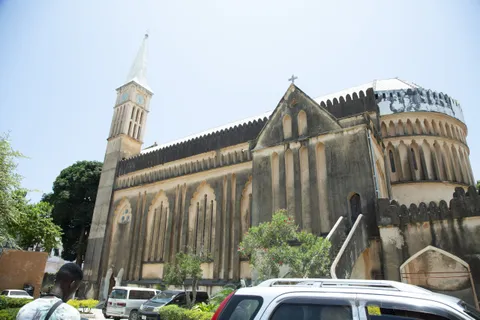
The turning point was 1840, when the Omani ruler Sultan Sa’id bin Sultan moved his capital from Muscat to Stone Town. He built the island’s wealth on cloves, mandating plantations across Zanzibar and Pemba until the islands were the world’s leading clove producer. That same trade had a brutal other side. Stone Town was the commercial hub of the East African slave trade, and enslaved people from the mainland were sold at a market in the centre of town. The Anglican Christ Church Cathedral was begun in 1873 and completed in 1879 on the site of that market, its altar reportedly set where the whipping post once stood, and the surviving underground holding chambers and a memorial can be visited today. It is a hard place to stand in, and it should be.
The sultanate ran Zanzibar as a British protectorate into the 20th century. A revolution in 1964 ended the sultanate, and Zanzibar joined mainland Tanganyika that year to form Tanzania. The island keeps its own president and administration under that union, which is why Zanzibar can feel like its own country even though it is part of Tanzania. All of that history is legible on a short walk, from the fort to the sultan’s old seafront palaces to the cathedral.
Zanzibar culture: what daily life feels like
Zanzibar culture is Swahili at its base, layered with Arab, Indian and European influence and shaped by Islam. Stone Town is overwhelmingly Muslim, and the day is marked by the call to prayer from dozens of mosques. That has practical effects for a visitor: dress modestly in the old town, covering shoulders and knees, keep swimwear for the beach, and expect quieter streets and shorter hours during Ramadan. It is not a hard code to follow, and locals notice and appreciate the respect.
The everyday language is Swahili, though English is widely spoken anywhere tourism reaches. A few words go a long way. “Jambo” or the more casual “Mambo” is hello (reply “Poa”), “Karibu” means welcome, and “Asante sana” is thank you very much. You will hear them all day.
Food is where the culture is easiest to taste. Swahili cooking leans on the island’s own spices, coconut and seafood, and the best crash course is an evening grazing at Forodhani, or a plate of urojo, the tangy local street soup. If you want to trace the flavours to their source, a spice farm tour in the countryside near town is the cheapest genuinely worthwhile half-day on the island, about US$15 to 25 per person (2026, verify). And Stone Town holds one more cultural claim: Freddie Mercury was born here as Farrokh Bulsara in 1946, and his family’s connection to the town is marked at the small museum near the seafront.
A half-day walking route
If you would rather explore on your own, here is a loop that strings the main sights together in about three to four hours. Start early, before the heat and the tour groups.
Begin at the seafront by the Old Fort and Forodhani Gardens. Look across at the closed House of Wonders, then step into the fort’s free courtyard.
Head inland into the lanes behind the fort. There is no wrong turn here; drift through the alleys of the Hurumzi and Kiponda quarters, watching for the best carved doors.
Come out at Darajani market, the loud, working heart of local Stone Town, where the produce, fish and spice stalls are. Watch your bag and your pockets here.
Walk to the former slave market and Anglican cathedral nearby, and give it the slow, quiet visit it deserves.
Loop back toward the sea through the shopping lanes around Gizenga and Kenyatta Road, picking up spices or a kanga on the way.
Finish at a rooftop bar for sunset, then drop down to Forodhani when the food stalls light up.
You can shorten it to the fort, the doors and the cathedral in about two hours, or stretch it with a longer stop at the market and the shops.
Markets and shopping
Darajani is the main market and the transport hub of Stone Town; it is also where the local dala-dala minibuses gather. It is not a tourist market, which is exactly why it is worth twenty minutes: heaps of cloves, cinnamon and dried fish, and the everyday commerce of the town. Go with your valuables tucked away, and for the island-wide picture see our is Zanzibar safe guide.
For souvenirs, the lanes around Gizenga and Kenyatta Road are lined with small shops selling spices, printed kanga and kitenge cloth, carved boxes, Tinga Tinga paintings and, of course, miniature versions of those famous doors. Haggling is expected and friendly; start well below the asking price and settle somewhere in the middle. One honest warning: some “guides” and shop touts work on commission and will steer you to whoever pays them, so buy where you like the goods, not where you are led.
Where to stay in Stone Town
Staying a night in the old town is worth it if you want the early-morning and after-dark version, when the day-trippers have gone. Many of the hotels are restored merchant houses, all carved doors, interior courtyards and rooftop terraces, and they range from simple guesthouses to a handful of grand heritage places. A rooftop room with a sea view and a good restaurant downstairs is the sweet spot.
Two honest notes before you book. First, this is a dense old town, so light sleepers should ask about noise and know that the pre-dawn call to prayer carries. Second, location matters more than star rating here: a place near Forodhani and the seafront puts you a minute from the sunset and the food, while the deep-lane guesthouses are quieter but harder to find in the dark. Our full where to stay guide breaks the island’s areas down; Stone Town is the pick for culture, food and a short first or last night near the airport.
How many days do you need
Half a day is enough to walk the old town and see the headline sights. A full day or a single overnight is better, and it buys you the two things a rushed visit misses: the Forodhani night market and a rooftop sunset. Beyond that, Stone Town makes a strong base for the west of the island. The giant Aldabra tortoises on Prison Island are a short boat ride away and a classic half-day (entry about US$12 to 15 per adult plus boat hire, 2026, verify), a spice farm tour is another, and the red colobus monkeys of Jozani Forest are an easy trip south. Two nights here lets you fold in a couple of those without feeling rushed.
Most people give Stone Town one to two nights and pair it with a beach. If you are still shaping the trip, our things to do guide ranks the island’s experiences, the best time to visit guide breaks down weather and crowds month by month (the cooler, drier season is far more comfortable for walking the old town), and the itineraries show how to split a week between Stone Town and the sand. Get the town, the timing and the beach lined up, and the days plan themselves.
Yes. Stone Town is the cultural core of Zanzibar and the one part of the island that is about history rather than beaches. A UNESCO World Heritage site since 2000, it is a walkable maze of coral-stone lanes, carved doors, mosques and old merchant houses, with the former slave market, the Forodhani night market and Freddie Mercury's birthplace all within a few minutes of each other. Even if you came for the sand, half a day here gives the trip its context. The honest caveat is that it gets hot, busy and touristy in places, so go early and ideally with a guide.
What is special about Stone Town?
It is one of the best preserved Swahili coastal trading towns anywhere, built almost entirely from coral rag stone, which is why UNESCO listed it in 2000. The architecture blends African, Arab, Indian and European styles in one place, most famously in its heavy carved wooden doors. Stone Town was the seat of the Omani sultanate and the hub of the 19th-century spice and slave trades, so the history runs deep and dark in equal measure. It is also the birthplace of Freddie Mercury. The House of Wonders, its landmark seafront building, is closed for long-term reconstruction after a 2020 collapse, so you admire it from outside.
How many days do you need in Stone Town?
Half a day is the minimum to walk the old town and see the headline sights, but a full day or an overnight is better and lets you catch the Forodhani night market and a rooftop sunset. If you use Stone Town as a base, add a day or two for the easy trips nearby: the giant tortoises on Prison Island, a spice farm tour and the red colobus monkeys at Jozani Forest are all half-day outings from here. Most people spend one to two nights before or after their beach stay.
Where should you avoid?
Stone Town is small and generally fine to explore on foot by day, but keep your wits about you around the Darajani market and the port, where pickpocketing and bag-snatching are most common, and do not walk alone down empty, unlit alleys after dark. Touts and unofficial guides gather around Forodhani and the seafront and can be pushy; a polite, firm no works. Away from the beach hotels this is a conservative Muslim town, so cover shoulders and knees out of respect and to avoid unwanted attention.
Is Stone Town safe at night?
It is reasonably safe if you take normal city precautions, but it is not risk-free. The lit main areas around Forodhani and the seafront stay busy and are fine in the evening, and the night market is a popular outing. Away from those, the alleys get very dark and easy to get lost in, so stick to main routes, walk with others, and take an arranged taxi rather than wandering back to your hotel alone late at night. Petty theft, not violent crime, is the main risk, so keep your phone and valuables out of sight and carry only the cash you need.
Forodhani Gardens is Stone Town's seafront street-food market, open each evening on the waterfront by the Old Fort. Vendors grill seafood and meat skewers, cook Zanzibar pizza to order, and press fresh sugarcane juice. Walking in is free; a light meal runs about US$3 to 8 (2026, verify). Order from the busiest stalls, eat what is cooked in front of you, and agree the price first.
The Old Slave Market in Stone Town stands on the site of East Africa's largest 19th-century slave market. The Anglican Christ Church Cathedral was built over it to mark the trade's end. You can visit the cathedral, a memorial sculpture, an exhibit on the slave trade and the underground holding cells. Entry is about US$5 per adult (2026, verify); allow about an hour. A sobering, essential visit.
Freddie Mercury's house in Stone Town marks the Queen frontman's Zanzibar birthplace, now a small private museum on Kenyatta Road. Expect a handful of rooms of photos, record sleeves and his childhood story, not a big production. Entry is about US$10 for adults and US$6 for children (2026, verify); most people spend 20 to 30 minutes. Worth it for Queen fans, easy to skip if not.
Prison Island (Changuu) is a short boat ride from Stone Town, and the draw is its colony of giant Aldabra tortoises, some over a century old. Despite the name it never held slave-trade prisoners: a prison built here in 1893 was never used, and the island became a quarantine station. Entry is about US$12 to 15 per adult plus boat hire (2026, verify). A half-day trip, with snorkelling too.