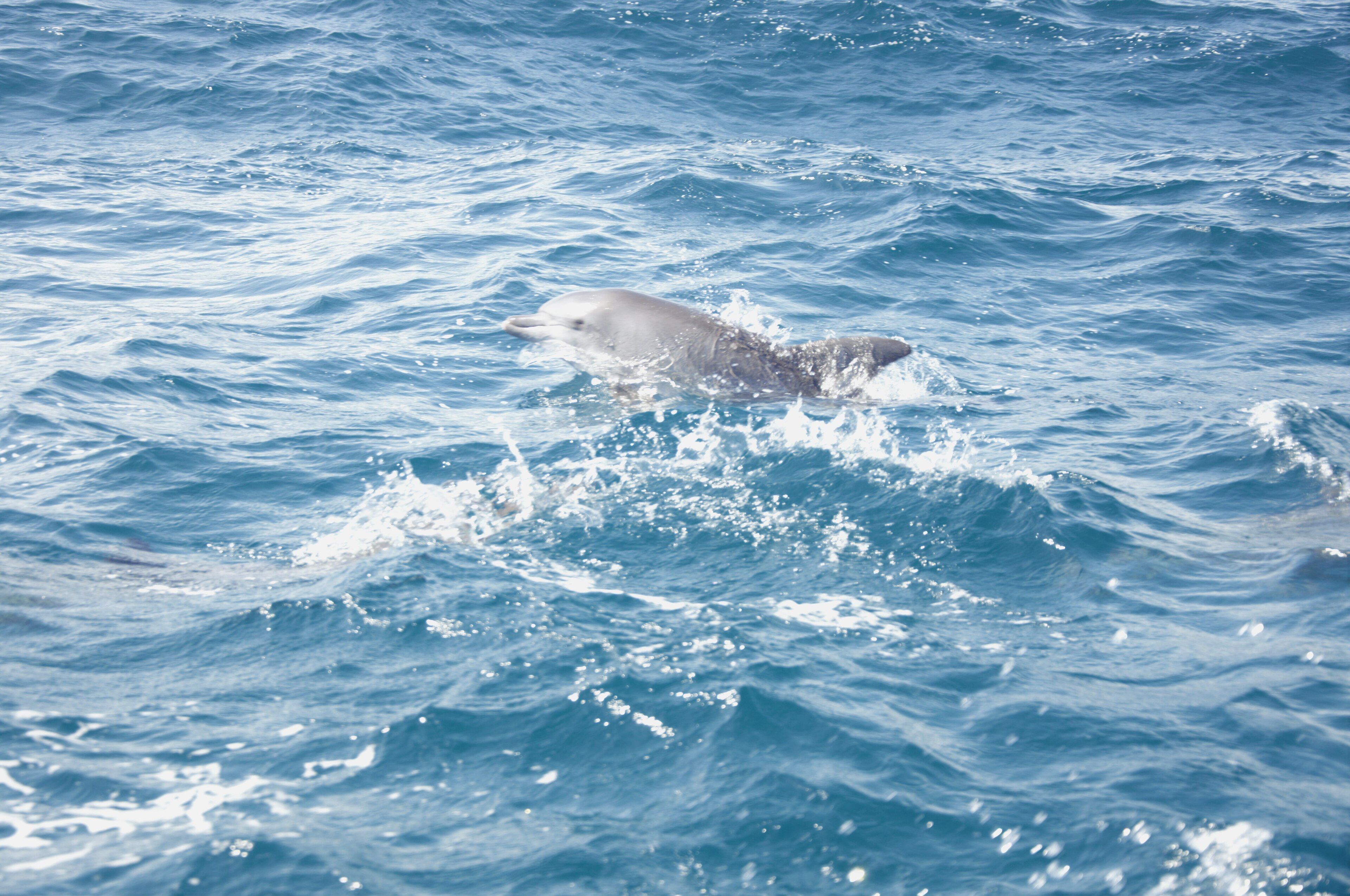
Swimming With Dolphins in Zanzibar (Kizimkazi): An Honest Guide
Wild dolphins, a real welfare problem, and how to do the Kizimkazi tour right: what to expect, what it costs, and how to spot an operator that behaves.
You can go swimming with dolphins in Zanzibar on a boat tour from Kizimkazi, on the far south coast, where wild bottlenose and humpback dolphins live in Menai Bay. The honest catch: some boats chase and crowd the pods, so this is only worth doing with an operator that keeps its distance and never chases.
That caveat is the whole point of this guide, so we are leading with it rather than burying it under booking links. Done badly, the Kizimkazi dolphin tour is one of the least ethical things you can do in Zanzibar. Done well, with the right boat and the right expectations, it can be a genuinely moving morning on the water. Here is how to tell the difference, what it costs, and what to do instead if it does not sit right with you.
The honest part first: the welfare problem
Zanzibar’s dolphins are wild. Nobody trains them, feeds them or keeps them in a pen, which sounds like the ethical version already. The problem is what the boats do. On a busy morning, a dozen or more small boats converge on a single pod, and the moment dolphins surface, drivers gun the engines and race straight at them so their passengers can leap in for a photo. The pod dives, resurfaces somewhere else, and the whole flotilla chases it down again.
That constant pursuit is not harmless. It interrupts the dolphins’ feeding, resting and nursing, it stresses the animals, and over the years it has pushed them further from shore. Conservation groups working in the area report that near-shore dolphin sightings have declined, which is exactly what you would expect when a wild population is hounded daily. This is not a fringe concern. It is the mainstream view among the marine organisations that actually work at Kizimkazi.
None of that means you cannot see dolphins responsibly. It means the operator you pick, and the way your boat behaves on the water, is the entire ethical question. A trip that hangs back and lets the dolphins carry on with their morning is a lovely, low-impact wildlife encounter. A trip that chases is one you are paying to make worse.
Can you actually swim with them?
Sometimes, and it is worth being clear-eyed about this before you book a trip sold as “swim with dolphins.” These are wild animals in open water, not a marine-park show, so there is no switch that guarantees you a swim. On a good morning, when a pod is relaxed and the sea is calm, a responsible guide will position the boat gently and let you slip quietly into the water some distance away, then the choice is the dolphins’. Sometimes they come close out of curiosity. Often they simply carry on and you watch their backs and fins from the surface.
The uncomfortable truth is that the more aggressively a boat tries to guarantee you a swim, the worse it usually is for the dolphins. Chasing a pod so tourists can jump in on top of it is the exact behaviour to avoid. So reframe the day: you are going to watch wild dolphins in their home, and a respectful in-water moment is a bonus, not the product. Booked that way, watching from the boat as a pod glides past in clear water is genuinely special, and you come home without having helped harass them.
What a Kizimkazi morning actually looks like
Two kinds of dolphin live in these waters. The resident bottlenose dolphins are the ones you are most likely to see, often in pods of a dozen or more, and they are around all year. Indian Ocean humpback dolphins also use the bay; they are shyer, tend to stick to shallower water near shore, and are seen less often. Neither performs. They feed, travel and rest, and a good trip is one where you get to watch that happen.
The morning itself is simple. You get picked up early, sometimes before dawn if you are coming from the north or east, reach Kizimkazi, and head out in a small open boat from the beach. The crew scans the water and, once a pod is spotted, the boat should slow and settle at a distance. If the dolphins are relaxed and the guide judges it right, you pull on a mask and fins and slip in quietly off the side, without splashing toward them. In the water you keep still and let them decide how close to come. Swims are usually brief, a minute or two before the pod moves on, and then you climb back in and, if the guide is doing it properly, you do not go tearing after them.
Most Kizimkazi trips are sold as a half or full day and pad the dolphins out with other stops, commonly a snorkel over a nearby reef and a visit to a local cave or the old mosque at Dimbani, one of the oldest in East Africa. That is fine and often makes the drive south more worthwhile, just know that the dolphin part is a slice of the morning, not the whole day.
How to pick a responsible operator
There is no perfect certification scheme to point at, so you have to judge behaviour. The good news is that a few Kizimkazi operators now train their drivers in cetacean-watching guidelines, and the marine conservation groups active in the area promote the same simple rules, drawn from World Cetacean Alliance guidance. Use this as your checklist, when you book and again on the water.
A responsible boat keeps its distance, holding back around 20 metres from the dolphins, and the best go further. No driving into the middle of a pod.
It moves at low, steady speed alongside the pod’s direction of travel, never straight at the animals and never cutting across their path.
It does not chase. If the dolphins move off, they are allowed to leave, and a good guide does not gun the engine after them.
Nobody touches the dolphins, and nobody feeds them.
It keeps numbers down, with fewer boats and fewer swimmers in the water at once. Small-group and private trips are easier to run this way than a packed mass boat.
It lets the dolphins come to you: position the boat, wait, and let them decide.
On the water, most of it comes down to a few green flags and red flags you can read in the first ten minutes.
Good sign, worth booking
Red flag, walk away
Talks about keeping distance and not chasing
Promises a “guaranteed swim”
Small boat, small group
Packs a big boat and races others to the pod
Hangs back and lets the dolphins approach
Drives straight into the middle of a pod
Happy to leave a pod that moves off
Chases a pod that is trying to leave
No touching, no feeding
Lets people touch or feed the animals
Ask an operator directly how they behave around the pods before you pay, and pay attention to how they answer. Ones that lead with “guaranteed swim, jump right in” are telling you something. Ones that talk about keeping distance and not chasing are telling you something better. Booking through a reputable hotel or established tour desk, rather than a beach tout, also makes it easier to find a boat that runs the ethical way.
What the dolphin tour costs
Prices depend on whether you book a bare boat trip or a full day with extras, and on shared versus private. As a 2026 guide, confirm at booking.
A shared boat trip, dolphins only, runs roughly US$15 to 30 per person (2026, verify).
A full day with lunch, a snorkelling stop and hotel transfers bundled in is often around US$50 per person (2026, verify). Many Kizimkazi trips are sold this way, paired with a cave visit or a snorkel over the reef.
A private boat costs more again, but buys you a smaller, calmer trip you can steer toward the ethical approach.
One thing to weigh: the cheapest mass trips are frequently the ones that cram boats together and chase, because volume is how they make the low price work. Paying a little more for a smaller, better-run boat is often the more responsible spend here. Bring cash in US dollars or shillings, since card payment is unreliable this far south. For how money works across the island, see our money and costs guide.
Where Kizimkazi is and how to get there
Kizimkazi sits at the far southern tip of Unguja, Zanzibar’s main island, and is made up of two fishing villages, Dimbani and Mkunguni. This is quiet, off-the-main-track Zanzibar: fishing boats on the sand, one of the oldest mosques in East Africa nearby, and far fewer resorts than the east and north coasts. Boats for the dolphins launch from here into Menai Bay.
Getting there means a drive. From the east-coast beaches (Paje, Jambiani) it is about 45 to 60 minutes, from Stone Town roughly an hour, and from the north (Nungwi, Kendwa) considerably longer, closer to two hours, which is why northerners usually book it as a long day trip. Most people take a hotel-arranged transfer or a negotiated taxi rather than driving themselves. Whatever you arrange, build in the early start the dolphins reward.
The best time to go
Two timing choices shape the day, and both point the same way: go early.
First, time of day. Early morning is best, as close to the first boats as you can manage. The sea is at its flattest, the dolphins tend to be more active and relaxed, and, most importantly, you get out onto the water before the crowd of boats arrives. A pod met by one or two respectful boats at dawn has a very different day from one surrounded by a dozen at mid-morning, and your experience is calmer and better for it too.
Second, time of year. There is no fixed dolphin season, so this comes down to comfort and odds on the water. The window to avoid, if you can, is the height of the long rains, roughly late March to May, when the bay turns choppy and boats are grounded more often. Outside that, the calmest seas and smoothest rides fall in the drier spells, June to October and again around December to February, which also nudge the chances of a relaxed encounter up a little. Our best time to visit guide has the full month-by-month picture.
What to bring
Pack light, but pack for a small boat in strong sun and open water. Wear your swimwear under your clothes so you are ready to get in without fuss, and bring a rash vest or a t-shirt to swim in, because you can spend a long stretch face-down in fierce equatorial sun. Reef-safe sunscreen, a hat and a towel round out the basics. If you are at all prone to seasickness, take something before you board, since these boats get lively once you are out in the bay. A dry bag or a waterproof phone pouch keeps your things safe from spray, and you will want cash in US dollars or shillings for the boat and any tips, as cards do not work down here. One more thing: Kizimkazi is a conservative fishing village, so cover up over your swimwear while you are on land, out of respect.
Is it worth it, and what to do instead
Honestly, it depends on you and on the boat. If you can book a small, responsible operator, go early, and treat the day as watching wild dolphins rather than demanding a swim, it is worth it: seeing a pod move through clear water in the early light is the kind of thing you remember. If the only trips you can find are the cheap, packed, chase-the-pod kind, the honest advice is to skip it. No photo is worth adding another chasing boat to a pod’s morning.
If you would rather see marine life without any of the ethical baggage, you have good options. A snorkelling trip to Mnemba Atoll off the northeast coast sometimes crosses paths with dolphins that pass the reef entirely on their own terms, with no chasing involved, and the snorkelling itself is the island’s best; our Mnemba Island guide has the detail. Divers see dolphins on the reef the same way, as a happy accident rather than the goal, covered in our diving guide. And there is plenty more to fill a Zanzibar itinerary without a wildlife trade-off, laid out in our things to do guide. Whatever you choose, the dolphins do best when we come as guests, not pursuers.
Frequently asked questions
Can you swim with dolphins in Zanzibar?
Sometimes, but not on demand. These are wild bottlenose and humpback dolphins off Kizimkazi, not captive animals, so there is no guarantee you will get in the water with them. On a good trip, when the dolphins are relaxed and the sea is calm, the guide may let you slip in quietly nearby. Often the honest and better experience is watching them from the boat rather than chasing a swim.
Is the Kizimkazi dolphin tour ethical?
It can be, and it can be the opposite, depending entirely on the operator. The problem is well documented: some boats speed at the pods and crowd them so tourists can jump in, which stresses the animals, and near-shore sightings have declined over the years. A responsible operator keeps its distance, moves slowly and parallel, never chases, and does not touch or feed the dolphins. Choose that kind, or skip it.
How much is the Kizimkazi dolphin tour?
As a 2026 guide, verify at booking: a shared boat trip is roughly US$15 to 30 per person, while a fuller day with lunch, a snorkelling stop and hotel transfers is often around US$50. Private boats cost more. Cheaper is not better here, because the lowest-priced mass trips are usually the ones that pack boats in and chase, so weigh price against how the operator treats the animals.
Where is Kizimkazi?
Kizimkazi is a pair of fishing villages, Dimbani and Mkunguni, at the far southern tip of Unguja, the main Zanzibar island. It is the launch point for dolphin trips into Menai Bay. From the east-coast beaches it is about a 45 to 60 minute drive, and from Stone Town around an hour, so many people book it as a full-day trip with an early start.
What is the best time of day for dolphins in Zanzibar?
Early morning, as close to first boats as you can manage. The sea is calmest then, the dolphins are typically more active and relaxed, and crucially you get out before the crowd of boats arrives, which means less chasing and a calmer scene for the animals. Later in the day the wind picks up and more boats converge, which is worse for you and for the dolphins.
Mnemba Island is a tiny private island off Matemwe on Zanzibar's northeast coast, ringed by the best coral reef near Unguja. You cannot land on it, but boat tours snorkel and dive the surrounding marine conservation area, full of turtles and reef fish. Access needs a marine fee of about US$10 per adult (2026, verify) plus a boat trip of roughly US$40 to 90 per person, usually from Matemwe.