Zanzibar works well with kids. Base on the north tip at Nungwi or Kendwa, where the sea swims at any tide, book a resort with a pool and family rooms, and add easy day trips like Jozani’s monkeys and the Nungwi turtles. The one real job to plan for is malaria, which is present all year, so see a travel clinic before you fly.
Families do well here for a simple reason: on the right beach the sea is warm, shallow near the shore and swimmable all day, and the island packs in enough easy outings, from monkeys and turtles to a spice farm and a boat trip, to fill the days you are not on the sand. It is not a hop-on-a-plane weekend, though. Two things do need planning around: the tide, which decides where you stay, and malaria, which decides your pre-trip admin. Sort those two and the rest is easy.
The best family beaches: Nungwi and Kendwa
For families, the single most useful thing to understand about Zanzibar is the tide, because it decides where you should stay.
The island’s beaches split by coast. The east and southeast, including Paje, Jambiani, Matemwe and Kiwengwa, sit on a wide, shallow reef. At low tide the sea pulls out hundreds of metres, sometimes close to a kilometre, leaving warm reef flats and seaweed farms behind. That is good fun for a while, since kids love the tide pools, the crabs and the starfish, but it means a proper swim has to wait for the water to come back, twice a day.
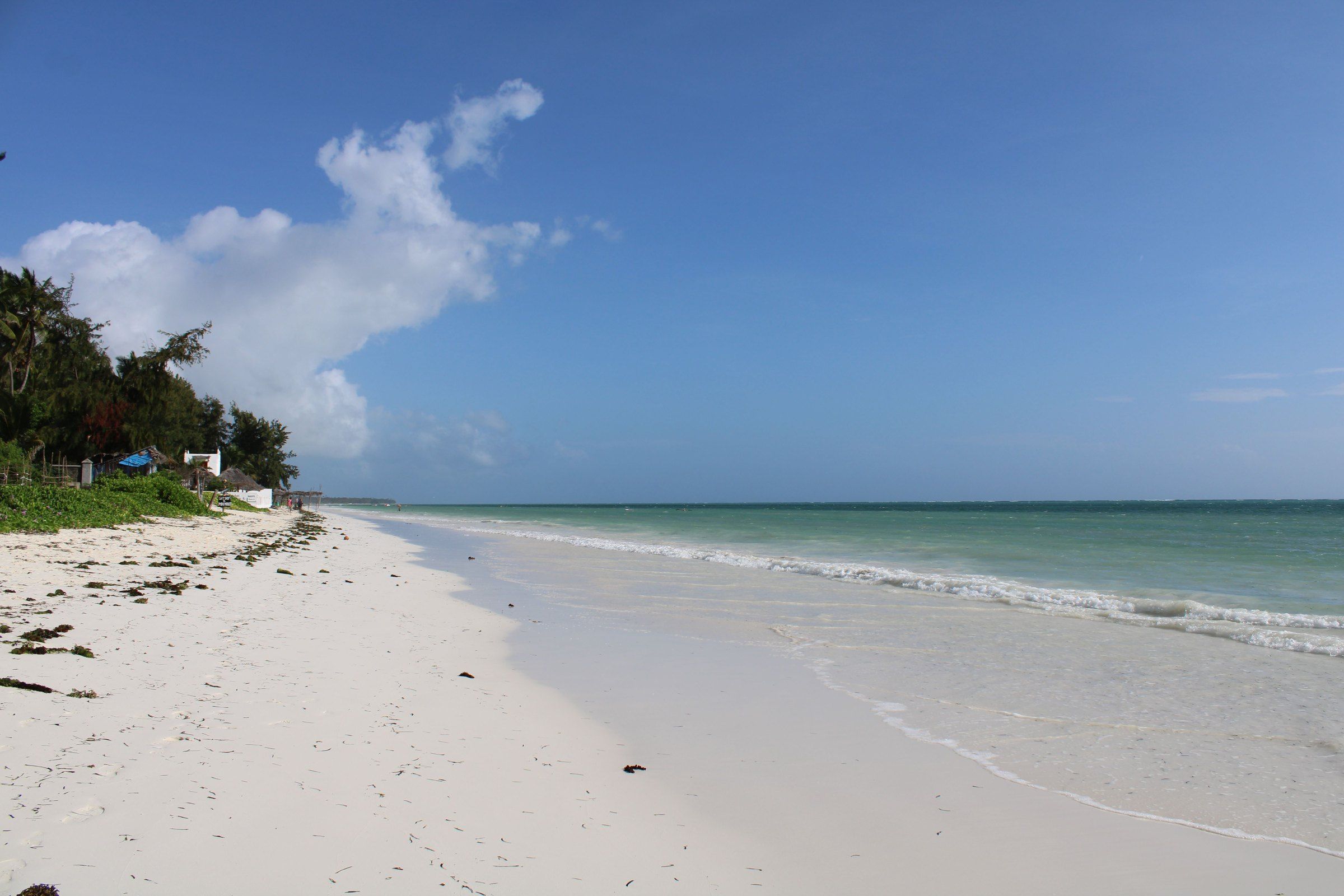
The north tip is different. Nungwi and Kendwa sit on deep water with barely any tidal swing, so the sea stays swimmable more or less all day. For a family that is the whole point: no one checks a tide table before a swim, and the afternoon does not stall while you wait for the water. Both beaches are wide, white and busy, with the widest choice of hotels, restaurants and boat trips on the island. Nungwi is the livelier and more built-up of the two; Kendwa, a few minutes south, is calmer, more resort-led and has the better sunsets.
Our beaches guide compares every coast in full, and the Nungwi and Kendwa pages have the detail on each. The short version for families: go north for reliable swimming, and treat the east coast’s low-tide walk-out as a play feature for younger kids rather than a swimming beach.
Family resorts: pools, kids’ clubs and family rooms
Once you have picked the north for the water, the resort is the next call. Zanzibar’s family-friendly stays come in two shapes.
The first is the big all-inclusive resort, where meals, drinks and a kids’ club sit under one price and there is always a pool. These cluster on the east coast at Kiwengwa and on the north tip. On the tide-dependent east coast the pool earns its keep, covering the hours the sea is out, which is exactly why a Kiwengwa all-inclusive works for families even though the beach itself is tidal. Our all-inclusive resorts guide rounds up the type, and the Kiwengwa page has the strip.
The second is a mid-range beach hotel with family rooms or a couple of connecting rooms, a pool and its own restaurant, which gives you more freedom to get out and explore. On the north tip you can pair one of these with swim-anytime sand, so you get both the pool and the sea without booking a full package.
Two practical notes before you book. Check that the hotel actually has family rooms, or can connect two, since a lot of Zanzibar properties are built around couples rather than children. And weigh an all-inclusive rate against room-only plus meals out; the package looks steep until you add up what it covers. Our where to stay in Zanzibar guide lays out the areas, the hotel types and the 2026 price bands.
Staying safe and healthy with kids
Two questions come up from parents more than any other: is it safe, and what about malaria. The honest short answers are yes with normal care, and it is manageable with a plan. Both have their own full guides, so here is the summary and where to read the detail.
On safety, Zanzibar is a popular and generally easy family destination. Violent crime affecting tourists is rare; the realistic risks are petty, opportunistic theft and persistent beach touts rather than anything aimed at children. The US State Department has Tanzania at a Level 3 “Reconsider Travel” advisory (raised in October 2025), but its terrorism warnings centre on a far-southern mainland border region, not Zanzibar’s beaches. The natural hazards matter more day to day: strong equatorial sun, and big tides that walk the sea out fast on the east coast. Keep the sunscreen, hats and shade going, and keep an eye on the water. Our is Zanzibar safe guide has the advisories, the Zanzibar-versus-mainland line and the family detail.
On malaria, the key fact is that it is present year-round across the islands, so you cannot dodge the question by timing your trip. The standard advice is antimalarial tablets plus mosquito-bite protection, meaning long sleeves at dusk, repellent and nets. The right tablet depends on each child’s age and health, which is a conversation for a doctor, not a website, so do not self-prescribe or reuse an old prescription. See a travel clinic or GP about four to six weeks before you fly, so any course can be started on time. Our Zanzibar health guide covers malaria, the recommended vaccinations and the yellow-fever rule in full.
Things to do in Zanzibar with kids
The beach fills most of a family week, but the day trips are what the kids talk about afterwards, and Zanzibar has a good run of them that suit children.
Jozani Forest, the island’s only national park, is the easy wildlife win. A short, shaded loop of an hour or two gets you close to the endemic red colobus monkeys, which are used enough to people that everyone gets a proper look, and the entry fee (about US$10 to 12 including a guide, 2026, verify) covers a ranger. The Nungwi turtle sanctuaries, lagoon pools where you can see and feed rescued green turtles, are a hit with younger children and cost about US$10 per person (2026, verify).
A spice farm tour near Stone Town is the sleeper hit: two to three hands-on hours where kids crush a clove leaf, taste raw cinnamon and vanilla, and try fruit they have never seen. It is cheap, well under US$25 a head (2026, verify), and genuinely engaging for children. On the water, confident young swimmers can snorkel Mnemba Atoll for the clearest reef on the island, where a government marine fee applies (about US$10 per adult and US$5 per child, 2026, verify). A Safari Blue-style dhow day out of Fumba mixes sailing, a sandbank stop, a lagoon swim and a seafood lunch. Just know a Safari Blue trip is a full 8 to 9 hour day and can be bouncy in wind, so it suits older kids better than toddlers.
Here is a quick guide to what suits which age.
Our things to do guide has the full list, including which trips are worth the higher price.
Getting there: the long-haul flight with kids
The catch with a Zanzibar family holiday is the journey, so plan it in.
As of 2026 there are no nonstop flights to Zanzibar from the US or the UK. Every route connects, usually through a Gulf hub such as Dubai, Doha or Abu Dhabi, through Istanbul, or through an African gateway such as Nairobi or Addis Ababa. That means a long travel day and at least one change with the kids and the bags. One to watch if you are booking well ahead: TUI plans to launch a London Gatwick to Zanzibar nonstop from late 2027, a UK first, which would cut the UK journey right down.
From Europe the time difference is small, since Zanzibar runs on East Africa Time, three hours ahead of GMT, so jet lag is mild. From North America the shift is bigger and worth easing into for a day or two. Once you land, it is about a 1 to 1.5 hour drive up to the north beaches, roughly US$35 to 60 in a taxi or private transfer (2026, verify). Break the journey with a night in Stone Town if the flights land you tired, or push straight through if the kids are holding up. For picking dates around the weather and the school holidays, our best time to visit guide has the month-by-month view; in short, the cool, dry June to October window and the hot, calm December to February one are the two best, and they line up with the summer and Christmas breaks.
Planning the trip
Get the basics right and Zanzibar is a straightforward family holiday: base on the north for swim-anytime sea, book a stay with a pool and family rooms, sort the malaria tablets with a clinic, and line up two or three day trips. Start with our where to stay guide for the area and the hotel, the things to do guide for the outings, and the health guide for the medical prep. The rest is beach time.