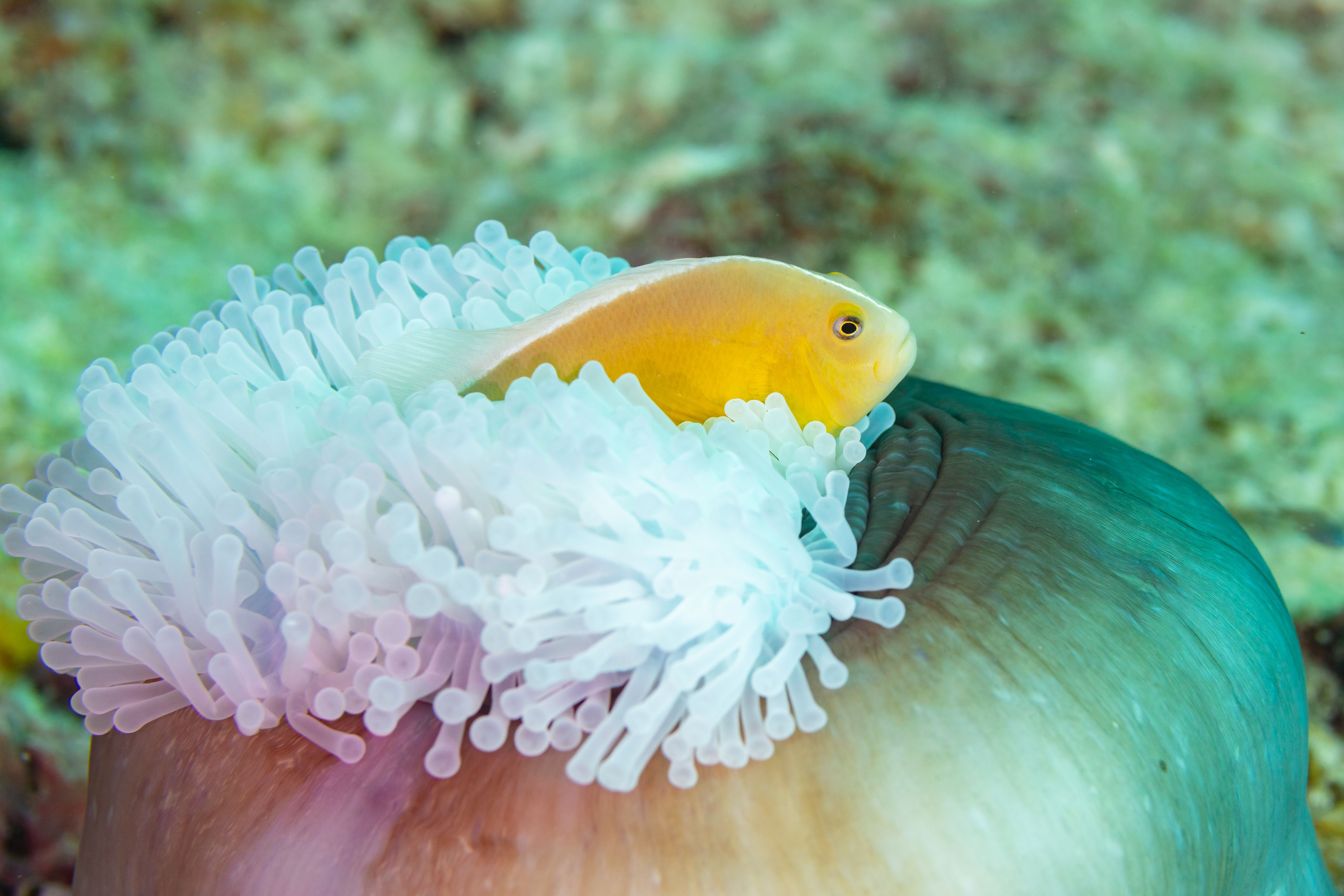
Diving in Zanzibar is good year-round, with warm water and the best sites clustered around Mnemba Atoll, Leven Bank and Tumbatu. Visibility is clearest in the calmer, drier months, and it is one of the friendliest places anywhere to learn: a fun dive runs about US$50 to 70, a PADI Open Water course roughly US$350 to 550 (2026, verify).
Here is the honest version. Zanzibar is a lovely place to do relaxed reef dives and an excellent place to get certified, but it is not the big-pelagic, wall-and-drift bucket-list destination some brochures imply. Set your expectations for turtles, healthy coral and clouds of reef fish rather than schooling hammerheads, and you will have a great few days underwater. Diving is one of the island’s signature days out, and the wider things to do guide rounds up the rest. Below are the sites worth your air, what a dive really costs once the marine fee is added, and how to pick a centre that runs a tight boat.
Is Zanzibar good for diving?
Yes, with a caveat worth stating plainly. For warm-water reef diving and for learning, Zanzibar is genuinely good. The Indian Ocean here is bath-warm, so you dive in a shorty or a thin wetsuit, the reefs around Mnemba are in decent shape, and the boat rides to most sites are 20 to 45 minutes rather than an all-day slog. Turtles are close to guaranteed at Mnemba, and you will see moray eels, octopus, rays, and reef fish in numbers.
What it is not is a heavyweight destination for big animals and dramatic topography. If you have dived the Red Sea, Sipadan or the Maldives, temper your expectations: the coral is good, not spectacular, and the “big stuff” is occasional rather than reliable. Serious divers who want walls, currents and bigger fish tend to take the short flight north to Pemba island, which has far clearer water and more dramatic diving, or head to Mafia. For everyone else, and especially for first-timers, Zanzibar hits a sweet spot of easy, warm, affordable diving with almost no barrier to entry.
The best dive sites in Zanzibar
Most diving happens off the north and northeast, where the reef and the dive centres are. Three sites carry the reputation, backed up by a scatter of gentler house reefs used for training and first dives.
Dive site
Where
Depth
Best for
Notes
Mnemba Atoll
Off Matemwe (NE)
~8 to 25m
All levels, turtles, reef
The headline. Easy, colourful, busy. Marine fee applies
Leven Bank
Off the north tip
~12 to 55m
Advanced only
Deep sea-mount, strong currents, bigger fish, tide-dependent
Tumbatu
Off the NW coast
~10 to 30m
Coral, quieter days
The prettiest coral gardens, fewer boats
Nungwi & Kendwa reefs
North tip
~5 to 18m
Beginners, training
Handy house reefs, gentle, short boat ride
Mnemba Atoll is the one everyone means when they talk about diving here. The ring of reef around the private island (you dive the reef, you do not land on the island) holds green turtles you will almost certainly see, plus reef fish in real density, the odd reef shark, and dolphins that sometimes pass through. The sites are shallow and forgiving, which is why they suit every level and why the boats can get busy. There is a marine conservation fee to dive here, covered below. If you only dive once in Zanzibar, most people do it at Mnemba. Our Mnemba Island guide covers the reef, the fee and how tours work in full.
Leven Bank is the site that gives Zanzibar diving its edge, and it is strictly for experienced divers. It is a sea-mount rising in open water off the north tip, sloping from around 12 metres down past 50, swept by currents that bring in bigger fish: kingfish, barracuda, tuna, big groupers, sometimes reef sharks. Those same currents and the tides mean it is only diveable on a handful of days each month, when conditions line up. If you are a confident, current-comfortable diver and the sea cooperates during your stay, this is the dive to angle for.
Tumbatu, off the northwest coast near the island of the same name, is the quiet pick. It has some of the healthiest coral gardens around Zanzibar and sees far fewer boats than Mnemba, so it can feel like you have the reef to yourself. A few centres charge a small supplement to run it because it is further out.
Then there are the house reefs off Nungwi and Kendwa on the north tip. They are not going to blow anyone’s mind, but they are exactly what you want for a first dive, a refresher, or the confined-water and shallow parts of a course: sheltered, shallow, short boat ride, gentle. Do not overlook them if you are learning.
What diving in Zanzibar costs
Prices vary by centre, season and how many dives you buy, so treat these as 2026 ballparks and confirm at booking. The figure people forget is the Mnemba marine fee, so it is listed on its own row.
What
Typical price (2026, verify)
Notes
Certified fun dive (single or two-tank)
US$50 to 70 per dive
Two-tank morning trips are the norm and best value per dive
Discover Scuba / intro dive
US$80 to 120
One supervised dive, no certification needed
PADI Open Water course
US$350 to 550
Three to four days, certifies you worldwide to 18 metres
Multi-dive package
Lower per-dive rate
Worth asking for if you plan four or more dives
Mnemba marine conservation fee
~US$10 adult, US$5 child
Separate government fee, charged on top of the dive
The thing to watch is what the headline price leaves out. On top of the dive, the Mnemba conservation area charges a government fee of about US$10 per adult and US$5 per child (2026, verify), and some centres add a small supplement (often around US$25 to 30) for premium or further-out sites like Mnemba or Tumbatu. Ask whether the marine fee and any site supplement are included in your quote, because desks frequently leave them out. Gear rental is usually built into course prices and often into fun-dive prices, but confirm it, and check the age and condition of the kit when you arrive. Pay in US dollars where you can and carry enough cash, as card machines are unreliable outside the bigger centres. For how cash, cards and tipping work across the island, see our money and costs guide.
Learning to dive in Zanzibar: beginners welcome
If you have never dived, Zanzibar is one of the gentlest places in the world to start. The training water is warm, shallow and calm, there is no thick wetsuit to fight, and the shallow reefs are unintimidating. You have two realistic routes.
The low-commitment option is a Discover Scuba Diving experience, a half-day where an instructor takes you down to around 12 metres after a short briefing and a confined-water skills session. No certification, no exams, just a taste of breathing underwater. It is the right call if you are curious but not ready to spend on a full course.
The proper route is the PADI Open Water course (SSI centres run the equivalent), which takes three to four days and certifies you to dive independently anywhere in the world to 18 metres. You can save a day on-site by doing the theory as e-learning before you fly. Many centres teach children from age 10 on junior courses, so it works for families. Book with a centre that keeps small student-to-instructor ratios and speaks your language comfortably, because clear instruction matters more than a shiny boat when you are learning.
When to dive: season and visibility
You can dive Zanzibar in any month. The water never gets cold, sitting around 25 to 29C through the year, so there is no true closed season. What changes is the clarity and the sea state.
The clearest, calmest conditions come in the drier stretches. The long dry season from June to October brings settled weather and is the most reliable window overall, and the hot, calm months around December to February also dive very well, often with lovely visibility on the flat days. Visibility on the reef commonly runs from around 15 metres up to 30 metres or more when the sea is settled.
The time to dodge if you can is the peak of the long rains, roughly late March to May. Run-off and wind can knock visibility down, the sea is rougher, and the exposed sites, Leven Bank especially, often do not run at all. Some smaller centres also scale back or close during this quietest stretch. If your trip lands then, you can still dive the sheltered north reefs on the calmer days; just build in flexibility. Our best time to visit guide breaks the whole calendar down month by month.
Where to base yourself for diving
Where you sleep shapes how much boat time you rack up. Three areas make sense for divers.
The north tip around Nungwi and Kendwa is the main dive hub, with the biggest cluster of centres, easy access to the training reefs, and the shortest run to Leven Bank. It is also the liveliest part of the island, with bars and a swim-anytime beach, so it suits divers who want a scene after the boat comes in. See the Nungwi beach guide for where to stay.
Matemwe, on the northeast coast, sits directly opposite Mnemba Atoll, so it is the shortest, calmest hop to the island’s best reef. It is quieter and more romantic than Nungwi, which suits couples who want to dive Mnemba and relax. The Matemwe beach guide has the detail.
The east coast (Paje, Jambiani) has fewer dive centres and longer transfers to the good reefs, so it is better if diving is a side activity rather than the main event and you are really there to kitesurf or unwind.
Prefer to snorkel? Zanzibar’s best snorkelling
You do not need to dive to get the best of Zanzibar’s reef. Snorkelling here is excellent, and for a lot of visitors it is honestly the better-value, lower-hassle choice.
The single best snorkelling in Zanzibar is Mnemba Atoll, the same reef the divers go for. In the shallow, protected water inside the atoll you will see turtles, big schools of reef fish, and the occasional dolphin, all without a tank on your back or a certification card. Half-day snorkelling boats leave from Matemwe and from the north, and the same marine conservation fee applies. Full detail on tours, timing and the fee is in the Mnemba Island guide.
Elsewhere, most beach hotels can arrange snorkelling on the nearest reef, and day trips like the sandbank excursions off Stone Town include a snorkel stop. Bring reef-safe sunscreen and, if you burn, a rash vest, since a long snorkel session leaves your back and legs exposed to hours of strong overhead sun. If you can only do one in-water thing in Zanzibar and you are not fussed about diving, a Mnemba snorkelling trip is the pick.
How to choose a dive centre
The gear you cannot see matters more than the boat you can. A few things separate a good operation from a risky one.
Look for a recognised certification affiliation (PADI or SSI), instructors who brief thoroughly and are not rushing groups through, and well-maintained, in-date equipment. Ask about the student-to-instructor ratio for courses and the diver-to-guide ratio on fun dives; smaller is better. A serious centre will ask to see your certification card and logbook, will run a check dive or refresher if you have not dived in a while, and will talk openly about conditions and turn a dive down if the sea is wrong. That last point is a good sign, not a bad one.
Two safety notes worth repeating. Sort dive insurance that specifically covers scuba (many standard travel policies exclude it, and the mandatory ZIC entry cover is not the same thing as diving cover); a policy that includes a chamber and evacuation is the sensible standard, given that serious cases here may need evacuation to Dar es Salaam. And do not fly too soon after your last dive: the usual guidance is to leave at least 18 to 24 hours before a flight, so plan your final dive day around your departure. Get those two things right and Zanzibar is about as low-stress as diving gets.
Frequently asked questions
Is Zanzibar good for diving?
Yes, for warm-water reef diving and for learning. The water is 25 to 29C all year, the reefs around Mnemba Atoll are healthy and full of turtles and reef fish, and boat rides are short. It is not a big-shark, big-drift destination like the Red Sea, and serious divers usually rate Pemba island to the north higher. But for relaxed reef dives and one of the friendliest places anywhere to get certified, it is very good value.
Where are the best dive sites in Zanzibar?
Mnemba Atoll off Matemwe is the headline, with easy, colourful reef dives and regular turtles. Leven Bank, a deep sea-mount off the north tip, is the advanced site, with currents and bigger fish, diveable only on the right tides. Tumbatu island has the prettiest coral gardens and fewer boats. Nungwi and Kendwa also have handy house reefs that dive centres use for training and gentle first dives.
How much does diving cost in Zanzibar?
As a 2026 guide, verify at booking: a certified single or two-tank fun dive is roughly US$50 to 70, a beginner Discover Scuba dive about US$80 to 120, and a PADI Open Water course around US$350 to 550 over three to four days. Diving Mnemba adds a marine conservation fee of about US$10 per adult, and some centres charge a small extra for premium sites like Mnemba or Tumbatu. Multi-dive packages bring the per-dive price down.
Can beginners dive in Zanzibar?
Yes. It is one of the easier places in the world to start, thanks to warm, calm, shallow training water. Non-divers can do a half-day Discover Scuba experience, going down to about 12 metres with an instructor and no certification. If you want the qualification, the PADI Open Water course takes three to four days and lets you dive independently to 18 metres worldwide. Most centres teach children from 10 and up on junior courses.
What is the best time of year to dive in Zanzibar?
You can dive all year. The water stays warm and there is no true off-season, but the clearest, calmest conditions come in the drier stretches: the long dry season from June to October and the hot, settled months around December to February. The time to avoid if you can is the peak of the long rains, roughly late March to May, when run-off and wind can drop visibility and the more exposed sites like Leven Bank often do not run.
Mnemba Island is a tiny private island off Matemwe on Zanzibar's northeast coast, ringed by the best coral reef near Unguja. You cannot land on it, but boat tours snorkel and dive the surrounding marine conservation area, full of turtles and reef fish. Access needs a marine fee of about US$10 per adult (2026, verify) plus a boat trip of roughly US$40 to 90 per person, usually from Matemwe.