
Getting Around Zanzibar: Taxis, Transfers & Dala-Dalas
Private transfers, taxi prices, the local dala-dala buses, car and scooter hire, and the honest way to travel between Zanzibar's beaches.
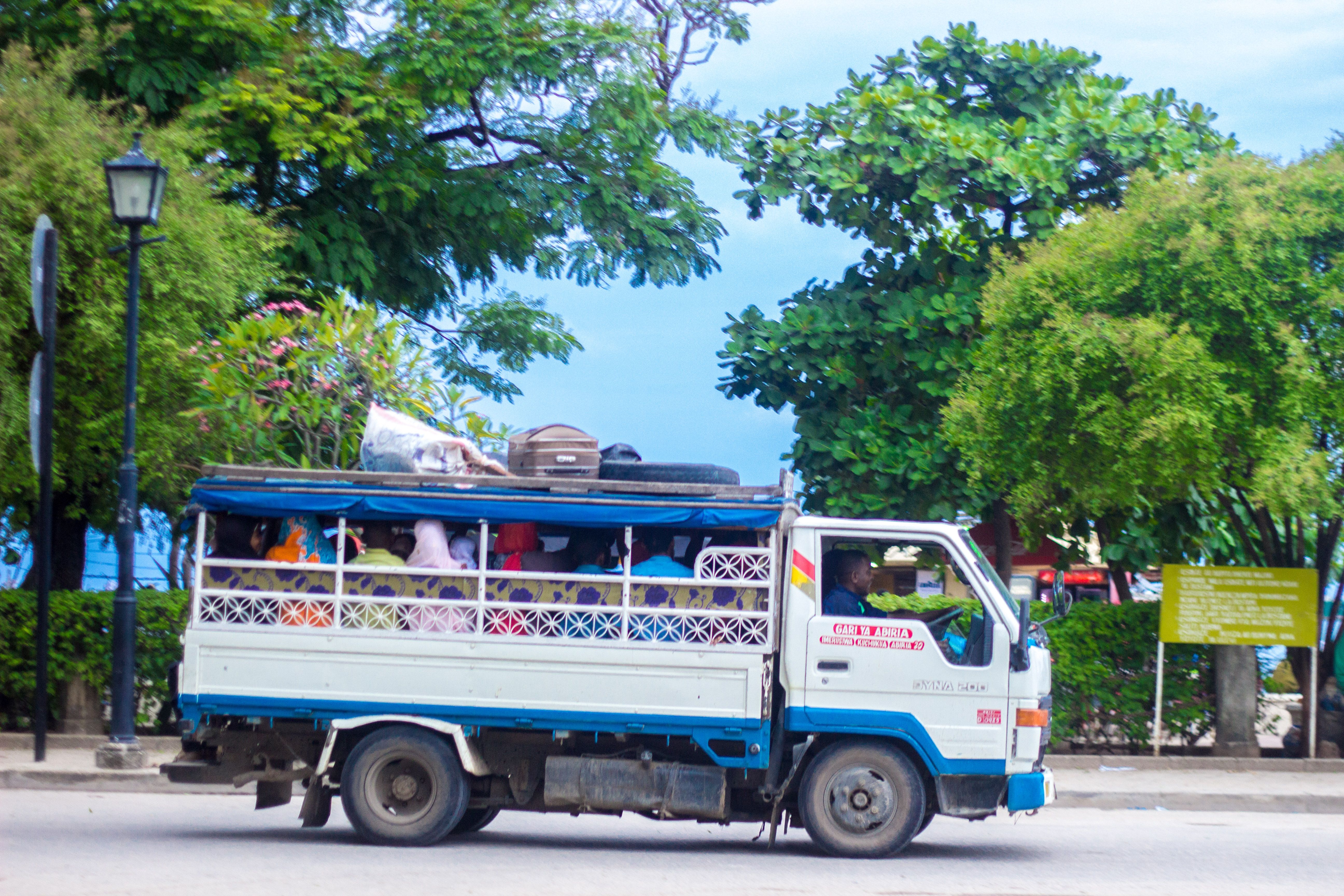
The easiest way to get around Zanzibar is a private hotel transfer or an agreed-fare taxi. Cheaper options are the shared dala-dala minibuses or hiring a car or scooter, which needs a local permit. There is no reliable Uber or Bolt on the island, so most visitors mix private transfers with negotiated taxis.
Distances are longer than the map suggests, and there is no road that follows the coast, so hopping between beaches usually means routing through Stone Town in the middle of the island. Here is what each option costs in 2026, how the local buses work, and the honest way to travel between the beaches.
Private transfers and taxis: the easy default
For most visitors, most of the time, the answer is a taxi or a private transfer. Zanzibar’s taxis have no meters, so the one rule that saves you money is simple: agree the fare before you get in, in full, in dollars or shillings. Quoting after the ride is where people get stung.
The smoothest version is a private transfer booked through your hotel: a fixed price, a named driver, and someone who actually knows the way to a beach lodge down an unsigned sand track. Almost every hotel arranges airport pickups and can set up day trips or point-to-point runs. It costs a little more than flagging a street taxi, and on arrival, or for a long cross-island journey, it is worth it.
Because there is no dependable ride-hailing app (a local one called Zingo exists, but coverage is thin, and Uber and Bolt do not work reliably), you cannot just summon a cheap car on your phone. Your working toolkit is hotel transfers for the airport and big journeys, agreed-fare taxis for everything else, and a good driver’s phone number saved for the return leg. Reliable drivers will happily wait or come back for you, so ask your hotel to recommend one.
If the airport run is your first ride, get your entry paperwork done before you land, so you can walk straight out to your driver. That means your Tanzania visa and the mandatory Zanzibar entry insurance:
Our getting to Zanzibar guide covers the airport, the ferry and the entry rules in full, and our visa and entry guide has the ZIC detail.
Taxi and transfer prices by area
Fares depend on distance, and Zanzibar is bigger than it looks, so a run to the far north costs several times a hop into Stone Town. These are indicative one-way taxi and transfer costs from the airport in 2026 (verify before travel):
| Destination | Rough drive | Typical taxi or transfer |
|---|---|---|
| Stone Town | about 15 min | US$10 to 15 |
| Paje / Jambiani (southeast) | about 1 h | US$35 to 45 |
| Matemwe / Kiwengwa (northeast and east) | about 1 h | US$40 to 60 |
| Michamvi / Pingwe (southeast peninsula) | about 1 h 15 | US$45 to 70 |
| Nungwi (far north) | about 1 h 20 | US$35 to 60 |
Within Stone Town, short taxi hops are only a few dollars. Private, air-conditioned transfers sit at the top of each band; shared or budget taxis at the bottom. Prices climb for late-night runs, waiting time and round trips, so confirm what is included when you settle the fare. Tipping is customary but not compulsory, and around US$3 to 5 for a driver on a standard transfer is normal (2026). For how these costs fit your wider spending, and the cash-versus-card reality on a cash island, see our money and costs guide.
Dala-dalas: riding the local bus
The dala-dala is Zanzibar’s shared local bus, usually a converted minibus or a pickup truck fitted with benches, and it is how most Zanzibaris get around. Fares are tiny: roughly 500 to 2,000 Tanzanian shillings a trip, about US$0.20 to 0.80 in 2026, paid in shillings to a conductor who hangs off the back.
They are cheap, and they are a real slice of local life, but be realistic about them. Dala-dalas are slow and crowded, and they run on no timetable, leaving when they fill up rather than at a set time. Most routes funnel through the Darajani area of Stone Town, so a beach-to-beach trip often means riding into town and changing. There is barely room for luggage, which makes them a poor choice for an airport run with bags. Ride one for the flavour and to save money on a short, simple hop, but do not build a tight schedule around them.
If you do ride, keep your bag on your lap, have small notes ready, and ask a local or the conductor which vehicle goes your way, since routes are marked by number and destination in Swahili rather than in English.
Hiring a car or scooter
Renting your own wheels buys you freedom, and Zanzibar makes it easy to arrange, if not always relaxing to drive. Scooters and motorbikes go for about US$15 to 25 a day in 2026 (verify before travel); small cars and 4x4s are available too, usually through your hotel or a local agency.
One rule is not optional: you need a Zanzibar temporary driving permit. The rental company arranges it for a small fee, alongside your home licence or an International Driving Permit. Do not skip it, because police checkpoints are common and riding without the permit means an on-the-spot fine. Wear a helmet on a scooter, both for your own safety and because the police look for it.
A few honest words on the driving itself. Traffic drives on the left. Road surfaces range from smooth tarmac to potholed sand tracks; livestock, bicycles and pedestrians share the road; and there is little street lighting once you leave the towns, so avoid driving after dark. Fuel stations are common enough on the main routes but thin out on the far coasts, so fill up when you get the chance. For a confident rider, a scooter is a brilliant way to explore a stretch of coast at your own pace. For everyone else, hiring a driver for the day often works out easier and barely more expensive.
Getting between the beaches
Here is the thing the brochures skip: Zanzibar has no coastal road hugging the shore, so getting from one beach to another almost always means driving inland and passing through or near Stone Town in the middle of the island. The beaches sit on different coasts, and the distances add up quickly.
A private taxi or transfer is the practical way to do it. As a rough 2026 guide, a north-to-southeast trip such as Nungwi to Paje takes around 1.5 to 2 hours by road and costs on the order of US$50 to 80 one way (verify before travel), depending on the route and your bargaining. Shorter hops between neighbours, say Nungwi to Kendwa, are quick and cheap. Dala-dalas link the beaches too, but with a change in Stone Town and a much longer day.
Some rough road times to plan around (2026):
- Stone Town to Nungwi (far north): about 1 hour 20 minutes
- Stone Town to Paje (southeast): about 1 hour
- Nungwi to Matemwe (across the north coast): about 1 hour
- Nungwi to Paje (north to southeast): about 1.5 to 2 hours
The lesson for planning is straightforward: pick one or two bases rather than hopping nightly, and let our where to stay guide and the beaches pages help you choose. Our Zanzibar itineraries are built around this reality, pairing Stone Town with one beach so you spend your time on the sand instead of in the back of a car.
Boats and flights between the islands
Water taxis are not a way to hop between Zanzibar’s beaches. The day boats you see are tours, such as Safari Blue from Fumba or the Nakupenda sandbank trip, not transport links, so do not plan on catching a boat from one beach to the next. To reach Pemba, the greener, quieter sister island to the north, you either fly (a short flight on a regional carrier, roughly 30 to 45 minutes, verify) or take the slower ferry, which runs less often and takes several hours. Most visitors who add Pemba fly, since it saves the better part of a day. For arriving in the first place, from your overseas flight to the Dar es Salaam ferry, see our getting to Zanzibar guide.
Getting around Stone Town
Stone Town is the one place you barely need transport at all. Its tangle of coral-stone lanes is too narrow for cars across most of the old quarter, so you explore on foot, and getting a little lost is half the point. For the ferry port, the Darajani market or a hotel on the edge of town, a short taxi hop costs only a few dollars. Keep your bearings by the seafront and the main landmarks, and see our Stone Town guide for a walking route through it.
Get your head around three ideas and Zanzibar’s transport stops being a puzzle: agree every fare before you move, base yourself on one or two beaches rather than chasing the whole island, and expect to route through Stone Town whenever you cross between coasts. Sort your arrival first with our getting to Zanzibar guide, then map out the days with our Zanzibar itineraries.
Frequently asked questions
How do you get around Zanzibar?
Most visitors use a mix of private hotel transfers and agreed-fare taxis, which is the easiest way to move around given there is no reliable Uber or Bolt on the island. Cheaper options are the shared dala-dala minibuses, which are very cheap but slow and routed through Stone Town, and self-drive by hired car or scooter, which needs a local permit. For travelling between distant beaches, a private taxi is usually the practical choice.
How much is a taxi in Zanzibar?
Taxis have no meters, so you agree the fare before you get in. As a 2026 guide (verify before travel): the airport to Stone Town is about US$10 to 15, to Paje or Jambiani about US$35 to 45, to Matemwe or Kiwengwa about US$40 to 60, and to Nungwi about US$35 to 60. Short hops within Stone Town are a few dollars. Private, air-conditioned transfers sit at the top of each range, and shared or budget taxis at the bottom.
What is a dala-dala?
A dala-dala is Zanzibar's shared local bus, usually a converted minibus or a pickup truck packed with passengers. Fares are tiny, roughly 500 to 2,000 Tanzanian shillings a trip, about US$0.20 to 0.80 in 2026, paid in shillings. They are slow, crowded, run on no fixed timetable, and most routes funnel through Stone Town, so they are great for the adventurous and the budget-conscious but impractical for an airport run with luggage.
Can you hire a car in Zanzibar?
Yes. Cars and scooters are widely available, with scooters around US$15 to 25 a day in 2026 (verify before travel). You need a Zanzibar temporary driving permit, which the rental company arranges for a small fee alongside your home licence or International Driving Permit. Police checkpoints are common, so carry your papers and wear a helmet on a scooter. Traffic drives on the left, and road quality and lighting vary a lot once you leave the towns.
How do I get between beaches?
There is no coastal road hugging the shore, so travelling between beaches usually means driving inland and routing through or near Stone Town. A private taxi or transfer is the practical option, and you agree the fare first. As a rough guide, north-to-east trips such as Nungwi to Paje take around 1.5 to 2 hours in 2026. Dala-dalas connect the beaches too, but they involve changing in Stone Town and take far longer.