
How to Get to Zanzibar: Flights, Ferry & Airport
Which airport Zanzibar uses, the one-stop routes from the USA and UK, the ferry from Dar es Salaam, and how to reach your beach once you land.
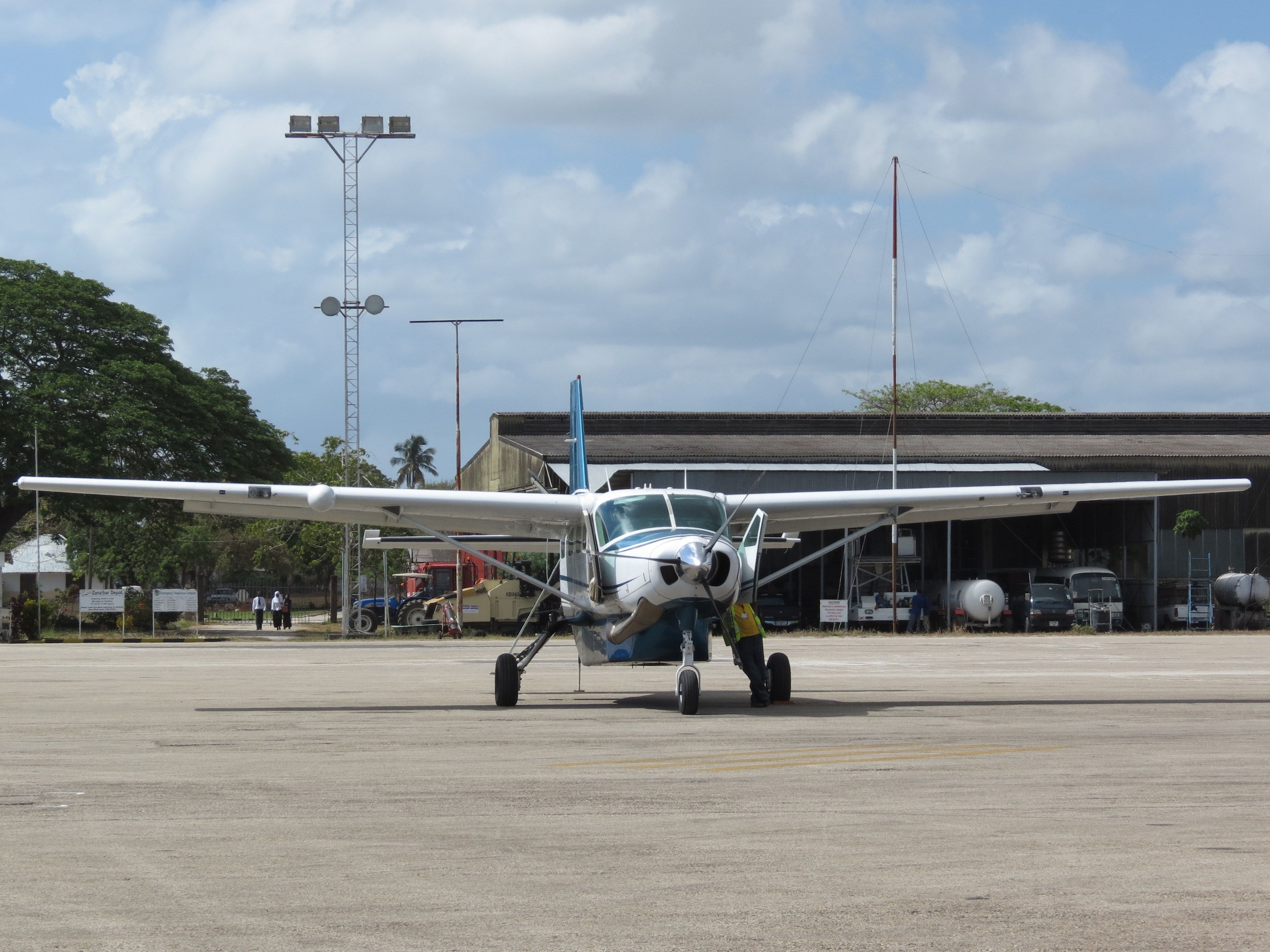
You get to Zanzibar by flying into Abeid Amani Karume International Airport (ZNZ) on the main island of Unguja, or by taking the fast ferry from Dar es Salaam to Stone Town. There are no nonstop long-haul flights from the USA or UK, so you connect once, through a hub like Doha, Dubai, Istanbul, Addis Ababa or Nairobi, then fly the last leg into ZNZ.
Most people fly the whole way. The ferry only comes into play if you are already in Dar es Salaam or want a slice of the mainland on the way through. Here is how each route actually works in 2026, what it costs, and how to get from the airport to your beach once you land.
Which airport does Zanzibar use?
Zanzibar’s airport is Abeid Amani Karume International Airport, code ZNZ, about 5 km south of Zanzibar City and its old quarter, Stone Town. It is the only commercial airport on Unguja, the main island, and it handles international, regional and domestic flights. Pemba, the quieter sister island to the north, has its own small airport used mainly for inter-island hops.
The international Terminal 3 opened in 2020, and it is where long-haul and regional flights arrive now: jet bridges, more immigration desks, the usual cafes and duty-free. A further terminal expansion was under construction and slated to finish around mid-2026, so which building handles your flight may have shifted by the time you fly (2026, verify before travel). Whichever terminal you land in, the sequence is the same: immigration, baggage, then a wall of taxi and transfer drivers outside the doors.
Have two things ready before you reach the immigration desk: your approved Tanzania eVisa and proof of the mandatory Zanzibar entry insurance. Both are covered further down.
Flights to Zanzibar: routes from the USA and UK
There is no nonstop flight from North America to Zanzibar, and none scheduled from the UK as of 2026, so every itinerary from those regions connects at least once. That is set to change for UK travellers, though: TUI launches the UK’s first nonstop, London Gatwick to Zanzibar, twice weekly from November 2027. For now, and from most other places, ZNZ is well served through the big Gulf, Turkish and East African hubs, so you usually change planes just once.
Common one-stop routings in 2026 (verify current schedules before booking):
- Via the Gulf: Doha on Qatar Airways, Dubai on Emirates or flydubai, Abu Dhabi on Etihad (seasonal). These tend to be the smoothest one-stop options from both the USA and the UK.
- Via Istanbul on Turkish Airlines, or via Addis Ababa on Ethiopian Airlines, both fed by wide North American and European networks.
- Via Nairobi on Kenya Airways, or via Dar es Salaam, then a 20-minute domestic hop across to ZNZ.
From the US east coast, reckon on roughly 20 to 26 hours of total travel including the connection; from the UK, around 12 to 16 hours. Carriers and routes into ZNZ shift often, with seasonal services coming and going, so treat any named airline as a starting point and check a flight search or a booking site for live options (2026, verify before travel). Comparing and booking the flight itself is one job we happily leave to the big flight sites. What matters here is the rest of the trip.
For timing all this around the weather and the crowds, our best time to visit guide lays out the seasons, and the itineraries help you shape the days once your flights are set.
The ferry from Dar es Salaam
If you are starting in Dar es Salaam, the fast ferry to Stone Town is a real alternative to the short flight, and a scenic one across the channel. The dominant operator is Azam Marine, running fast Kilimanjaro-class catamarans in about 1 hour 45 minutes to 2 hours.
Non-resident one-way fares in 2026 (verify on azammarine.com before you travel):
| Class | One-way non-resident fare |
|---|---|
| Economy | US$35 |
| Business | US$40 |
| VIP | US$60 |
| Royal | US$100 |
| Child (5 to 11), economy | about US$30 |
Residents pay lower fares in shillings; as a foreign visitor you pay the tourist rate and show your passport when you buy and board. Book online at azammarine.com or through an authorised agent, or buy at the Dar es Salaam or Stone Town terminals. Get to the port early, because the ticket and boarding halls get busy, and buy only from the official counter or website. The freelancers who approach you outside the terminal with “tickets” are the ones to walk past.
The crossing is usually smooth but can get lumpy when the monsoon winds pick up, so if you get seasick, take a tablet beforehand and sit toward the middle of the vessel. Ferry or fly is a simple call: the flight is faster and pricier, the ferry is cheaper and lets you watch Stone Town rise out of the water on the approach.
Flying in from the Tanzanian mainland
Plenty of visitors reach Zanzibar not from overseas but from elsewhere in Tanzania, usually after a safari. Short domestic flights connect ZNZ with Dar es Salaam (about 20 minutes) and with Arusha and Kilimanjaro (about 1.5 hours), the gateways to the northern safari circuit. Regional carriers on these routes include Coastal Aviation, Auric Air, Precision Air and ZanAir, though schedules and operators change, so verify before you count on a specific one.
The classic Tanzania trip is a northern safari through the Serengeti and Ngorongoro, then a flight from Arusha or Kilimanjaro straight to a Zanzibar beach to wind down. It works, and it saves a long overland backtrack. If that is your plan, our Zanzibar itineraries walk through the bush-and-beach combo and its logistics. One practical catch: these small planes carry strict luggage limits, often around 15 kg in soft bags, so pack light and check your allowance.
Getting from the airport to your beach
This is the part people underestimate. Zanzibar is bigger than it looks on a map, and your ride from ZNZ can be anything from a 15-minute run into Stone Town to a 1 hour 20 minute drive up to Nungwi. The easiest option by far is a private transfer arranged by your hotel: a named driver waiting with a sign, a fixed price agreed in advance, and no haggling after a long flight. Failing that, the airport taxis are plentiful. Just agree the fare before you get in, because there are no meters.
Indicative one-way transfer costs in 2026 (verify before travel), taking the two most common arrivals as bookends:
| Where you are headed | Rough drive | Typical taxi or transfer |
|---|---|---|
| Stone Town | about 15 min | US$10 to 15 |
| Nungwi (far north) | about 1 h 20 | US$35 to 60 |
Most beaches fall between those two. The full transfer table by area, and what pushes a fare to the top or bottom of each band, is in our getting around Zanzibar guide. Know one thing before you land: there is no dependable Uber or Bolt on Zanzibar, so do not plan to hail a cheap ride-share from the terminal. A local app called Zingo exists, but coverage is patchy, and most visitors rely on hotel transfers and agreed taxi fares. To choose which coast to base on, our where to stay guide and the beaches pages lay out the trade-offs.
Before you go: visa, insurance and entry rules
Sort three things before you fly and arrival is painless.
First, your visa. Most visitors need a Tanzania visa, bought in advance online at the official portal, visa.immigration.go.tz. The ordinary single-entry tourist visa is US$50; US citizens must take the multiple-entry visa at US$100, valid for 12 months (2026, verify before travel). Any website charging more than the official fee for an ordinary visa is an unauthorised agent, so book direct. Carry a passport valid for at least six months with blank pages.
Second, the mandatory Zanzibar entry insurance. Since 1 October 2024, every non-resident visitor has to hold the Zanzibar Insurance Corporation (ZIC) inbound policy, bought online before you travel. It is a separate entry requirement, not the same thing as your own travel insurance, and it does not replace medical or evacuation cover.
Buy it in advance at the official portal to skip the airport queue, and keep the confirmation with your visa. Our visa and entry guide has the full ZIC breakdown, who pays what, and the fine print; our money and costs guide covers your own travel insurance, which you should also have.
Third, two small but real rules. Tanzania bans plastic carrier bags, and you may be asked to hand them over on arrival, though the ziplock bags for your toiletries are exempt. Pack a reusable tote and leave loose plastic bags at home. And if you are arriving from, or transiting for 12 hours or more, a country with yellow fever risk (Kenya and Uganda included), you need a yellow fever certificate. Arriving straight from the USA, UK or Europe, you do not (2026, verify before travel).
At the airport: a few arrival tips
A handful of small things smooth the first hour on the ground:
- Have your printed eVisa, ZIC confirmation and hotel details ready before the immigration desk. Officers sometimes ask to see onward or accommodation proof.
- Get cash sensibly. There are ATMs at the airport that dispense Tanzanian shillings, but they can be unreliable, so do not lean on a single machine. US dollars are widely accepted, but the notes must be Series 2009 or newer and in clean, untorn condition, or they get refused. Our money and costs guide has the full cash rules.
- A local SIM card needs your passport to register. Buy one at the airport or in Stone Town, or set up an eSIM before you fly.
- Expect a crowd of drivers outside the doors. If you pre-booked a transfer, look for your name. If not, agree the full fare before you load your bags.
Get your flights or ferry booked, your visa and ZIC sorted, and your airport transfer arranged, and the hardest part of a Zanzibar trip is behind you before you even land. Next, line up how you will move around the island in our getting around Zanzibar guide, and start shaping the days themselves with our Zanzibar itineraries.
Frequently asked questions
How do I get to Zanzibar from the USA?
There are no nonstop flights from the United States to Zanzibar, so you connect once, usually through a Gulf hub like Doha, Dubai or Abu Dhabi, or through Istanbul, Addis Ababa or Nairobi, then fly the final leg into Abeid Amani Karume International Airport (ZNZ). Total travel time is commonly around 20 to 26 hours depending on the connection. Some travellers instead fly into Dar es Salaam on the mainland and take the 20-minute hop or the ferry across.
Which airport does Zanzibar use?
Zanzibar's airport is Abeid Amani Karume International Airport, IATA code ZNZ, about 5 km south of Zanzibar City and Stone Town. It is the only commercial airport on the main island, Unguja, and handles international, regional and domestic flights. The international Terminal 3 opened in 2020. Pemba, the quieter sister island to the north, has its own small airport for inter-island flights.
How do I get from Dar es Salaam to Zanzibar?
You have two options: a fast ferry or a short flight. The Azam Marine fast ferry from Dar es Salaam to Stone Town takes roughly 1 hour 45 minutes to 2 hours, with non-resident economy fares around US$35 one way in 2026 (verify before travel). The flight takes about 20 minutes on a regional carrier and costs more but saves time. Bring your passport for either, and buy ferry tickets from the official Azam counter or website, not from touts at the port.
How do I get from the airport to Nungwi?
Nungwi sits at the far north tip, about a 1 hour 20 minute drive from the airport. The simplest option is a pre-booked private transfer or a taxi arranged through your hotel, which runs roughly US$35 to 60 in 2026 (verify before travel). Taxis have no meters, so agree the fare before you set off. There is no reliable Uber or Bolt on the island, so do not count on hailing a ride-share at the terminal.
Is the ferry safe?
The Azam Marine fast ferries between Dar es Salaam and Stone Town are the established, licensed service and carry large numbers of travellers every day on modern Kilimanjaro-class catamarans. They are generally reliable. The crossing can get choppy when the monsoon winds are up, so take a motion-sickness tablet if you are prone to seasickness, sit toward the middle, and keep a hand on your bags in the busy terminal. Book with Azam Marine rather than informal sellers at the port.