Forodhani Gardens Night Market: Zanzibar Street Food
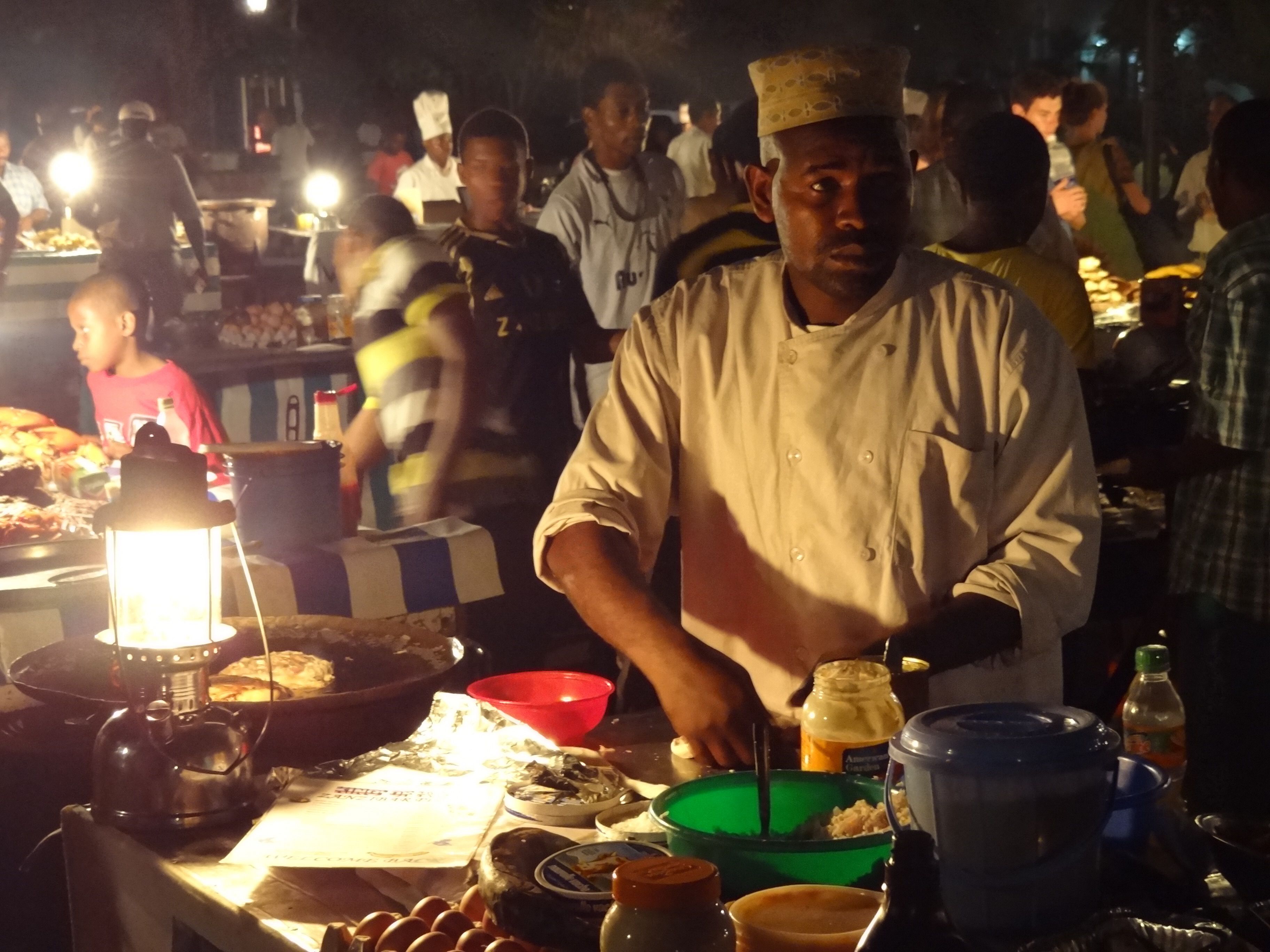
Forodhani Gardens is Stone Town's seafront street-food market, open each evening on the waterfront by the Old Fort. Vendors grill seafood and meat skewers, cook Zanzibar pizza to order, and press fresh sugarcane juice. Walking in is free; a light meal runs about US$3 to 8 (2026, verify). Order from the busiest stalls, eat what is cooked in front of you, and agree the price first.
Forodhani Gardens night market is Stone Town’s seafront street-food scene: grilled seafood, meat skewers, Zanzibar pizza and fresh sugarcane juice, sold from stalls in the waterfront gardens every evening. Walking in is free, a light meal costs about US$3 to 8 per person (2026, verify), and it runs from roughly 6pm until late.
It is the easiest, most sociable meal in Stone Town, and one of the few big evening attractions that costs nothing to join. Come hungry, come as the light drops, and treat it as a grazing session rather than a proper sit-down dinner. The trick to a good night here is knowing what to order, what to skip, and how much to actually pay.
What Forodhani is, and when to go
Forodhani is a public seafront park on the western edge of Stone Town, on Mizingani Road right beside the 17th-century Old Fort. It faces the water and the House of Wonders, the tall seafront landmark that partially collapsed in 2020 and is closed for a long reconstruction, so you admire it from the Stone Town seafront. The gardens were landscaped in a renovation around 2009 and are pleasant to sit in by day, but the reason people talk about Forodhani is the food that appears after dark.
Timing matters. Vendors start wheeling in carts and lighting charcoal in the late afternoon, and the market fills out from about 6pm, running until 10 or 11pm (2026, verify, there are no ticketed hours). Aim for sunset. You get the light over the harbour, the food is at its freshest before it has been sitting out, and the crowd is a genuine mix of Zanzibari families and travellers rather than only tourists.
What to eat
The menu is grilled, fried and sweet, and most of it is cheap. Here is the honest rundown, with rough 2026 prices to verify on the night, since vendors set their own.
Dish
What it is
Rough price (2026, verify)
Zanzibar pizza
A thin wheat-dough pancake folded around fillings (minced meat, egg, cheese, vegetables), cooked flat on a griddle; sweet versions use banana and chocolate
~US$2 to 5
Mishkaki
Charcoal-grilled skewers of beef, chicken or seafood
~US$1 to 3 each
Grilled seafood
Fish, prawns, calamari, sometimes lobster, cooked over coals
~US$3 to 10
Urojo
A tangy local soup, sometimes called Zanzibar mix, with bhajia, potato and crunchy bits
~US$1 to 2
Sugarcane juice
Cane pressed to order with lime and ginger
~US$1
Samosas, chapati, cassava
Fried and griddled snacks to fill gaps
small change
Two things are worth going out of your way for. The first is Zanzibar pizza, which is nothing like an Italian pizza: it is a folded, pan-fried parcel, savoury or sweet, cooked to order while you watch, which also makes it one of the safer bets. The second is a cup of sugarcane juice, pressed through a hand-cranked mangle in front of you and sharpened with lime and ginger. Skewers straight off the grill are the third easy win. Approach the big trays of pre-arranged seafood with more care, because those are the plates most likely to have been sitting out.
Eating safely without missing out
Avoiding the tourist traps
Forodhani is friendly, not a scam pit, but it is a tourist magnet and a few stalls price accordingly. A little firmness fixes it. Decide what you want, ask the price up front, and pay roughly what the ranges above suggest. If a number sounds high, it usually is, and the stall next door will be cheaper.
Prices and how to pay
Budget about US$3 to 8 per person for a satisfying graze: a Zanzibar pizza, a couple of skewers, a juice and something sweet. Bring cash in small denominations, Tanzanian shillings or US dollars, because this is a cash economy and card machines are not a thing at a food cart. Having exact-ish change is the single best defence against being overcharged.
Getting there, and who it suits
Forodhani is easy to reach because it is on the Stone Town waterfront, a few minutes on foot from almost any hotel in the old town and from the ferry port. If you are staying at a beach, this is part of a Stone Town evening rather than a trip on its own, so pair it with a day in the old city before your driver takes you back.
It suits families well. Kids tend to love the pizza-and-juice combo, the gardens are open and safe to wander at dusk, and the cooking is a show in itself. Bear in mind there is very little seating, so most people eat standing or perched on the low seawall. Vegetarians are fine here too: vegetable Zanzibar pizza, urojo, samosas, chapati and cassava are all easy to find, though it is worth checking a soup or sauce is not made with meat stock. Bring a light layer for the sea breeze, and keep an eye on your bag in the busy crowd, the same everyday caution you would use at any packed market.
Making an evening of it
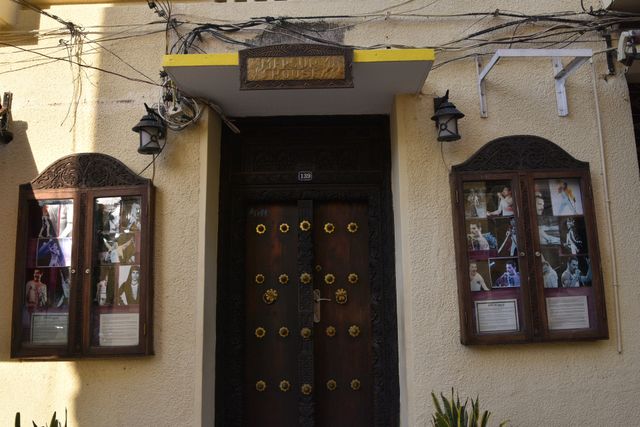
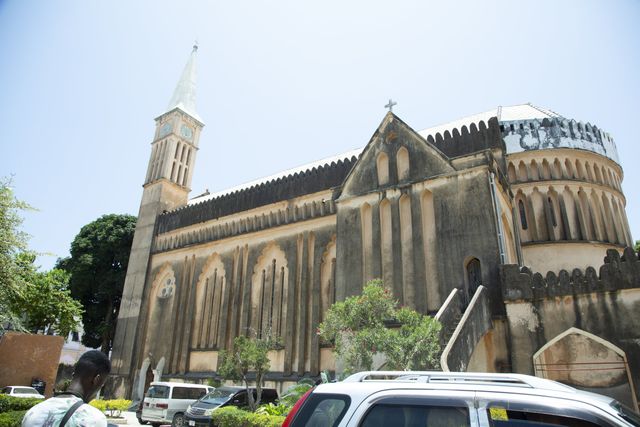
Forodhani works best as the anchor of a Stone Town evening rather than a standalone trip. Wander the old-town lanes in the late afternoon, catch the sunset from the seawall, then eat. It is a two-minute walk from Freddie Mercury’s house and museum, so a neat plan is the museum first, then dinner by the water. For daytime history nearby, the Old Slave Market and Anglican Cathedral is a short walk inland. For the full lay of the land, the carved doors, the markets and where to stay, start with the Stone Town visitor guide.
One seasonal note: during Ramadan, most food stalls stay shut through the daylight fasting hours, but the seafront comes alive again after sunset, when the market fills with families breaking their fast. If you visit in Ramadan, come for the evening and be discreet about eating and drinking in public before dusk.
Forodhani market, or Forodhani Gardens night market, is Stone Town's evening street-food gathering on the Zanzibar seafront, next to the Old Fort and opposite the closed House of Wonders. Each evening dozens of vendors set up charcoal grills and stalls in the public gardens, selling seafood and meat skewers, Zanzibar pizza, samosas and fresh juices. It is free to walk in and you pay only for what you eat.
What time does Forodhani open?
The stalls set up in the late afternoon and are busiest from about 6pm until 10 or 11pm, so it is a dinner-time market rather than a daytime one (2026, verify, as there are no fixed hours). Come around sunset for the best atmosphere and the freshest food, before things have been sitting on the grill. The gardens themselves are a public park you can walk through at any time of day.
What should you eat at Forodhani?
The signatures are Zanzibar pizza, a thin dough pancake folded around fillings and cooked to order on a griddle, and mishkaki, grilled meat or seafood skewers. Try urojo, a tangy local soup sometimes called Zanzibar mix, and a cup of fresh sugarcane juice pressed with lime and ginger. Stick to things cooked in front of you rather than seafood that has been piled on a plate for a while.
Is Forodhani food safe?
It can be, if you choose carefully. Pick the busiest stalls, where fast turnover means fresher food, and order things cooked to order and served hot, like Zanzibar pizza and skewers straight off the grill. Be more cautious with pre-cooked seafood platters left sitting out, and with ice or tap water in drinks if you have a sensitive stomach. Most visitors eat here without any trouble, but a minority get an upset stomach, so use your judgement.
Is Forodhani market worth it?
Yes, mostly for the experience rather than the cooking. Eating grilled food by the water at sunset, among local families out for the evening, is one of the best free things to do in Stone Town. The food is cheap and hit-or-miss, and some stalls overcharge tourists, so agree prices first and keep expectations realistic. Go once for the atmosphere and you will probably be glad you did.
Freddie Mercury's house in Stone Town marks the Queen frontman's Zanzibar birthplace, now a small private museum on Kenyatta Road. Expect a handful of rooms of photos, record sleeves and his childhood story, not a big production. Entry is about US$10 for adults and US$6 for children (2026, verify); most people spend 20 to 30 minutes. Worth it for Queen fans, easy to skip if not.
The Old Slave Market in Stone Town stands on the site of East Africa's largest 19th-century slave market. The Anglican Christ Church Cathedral was built over it to mark the trade's end. You can visit the cathedral, a memorial sculpture, an exhibit on the slave trade and the underground holding cells. Entry is about US$5 per adult (2026, verify); allow about an hour. A sobering, essential visit.
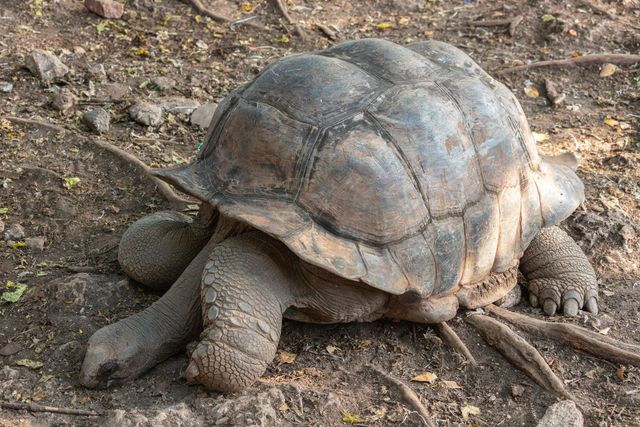
Prison Island (Changuu) is a short boat ride from Stone Town, and the draw is its colony of giant Aldabra tortoises, some over a century old. Despite the name it never held slave-trade prisoners: a prison built here in 1893 was never used, and the island became a quarantine station. Entry is about US$12 to 15 per adult plus boat hire (2026, verify). A half-day trip, with snorkelling too.