Prison Island (Changuu): Giant Tortoises & How to Visit
Prison Island (Changuu) is a short boat ride from Stone Town, and the draw is its colony of giant Aldabra tortoises, some over a century old. Despite the name it never held slave-trade prisoners: a prison built here in 1893 was never used, and the island became a quarantine station. Entry is about US$12 to 15 per adult plus boat hire (2026, verify). A half-day trip, with snorkelling too.
Prison Island (Changuu) sits a short boat ride off Stone Town, and the reason to make the trip is the colony of giant Aldabra tortoises, some of them well over a hundred years old. Despite the name, it never held prisoners of the slave trade. A prison was built here in 1893, never used as one, and the island became a quarantine station instead.
You reach it in about 20 to 30 minutes by boat from the seafront, usually as a half-day outing. Most people come for the tortoises, stay for a snorkel, and leave a little surprised by the island’s real history. Here is what to see, what it costs, and whether it earns the boat fare.
Meet the giant tortoises
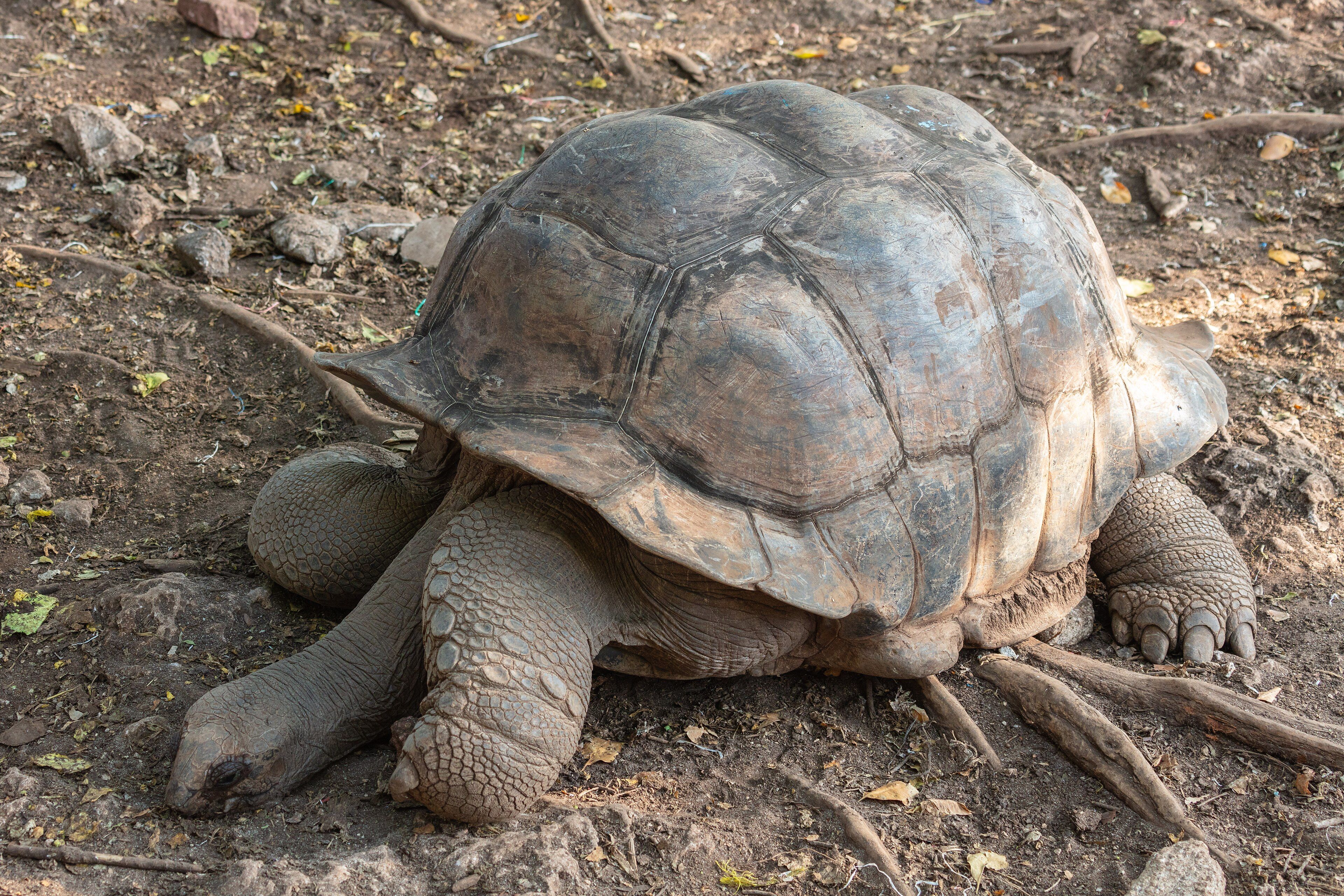
The tortoises are the whole point, and they live up to it. These are Aldabra giant tortoises, the same species found on the remote atolls of the Seychelles, and the Changuu colony traces back to a gift of four animals from the governor of the Seychelles in 1919. That handful has grown into a managed group of well over a hundred, ranging from palm-sized hatchlings in a protected pen to hulking elders the size of a coffee table.
You walk right in among them. In the sanctuary enclosure the big ones plod around at their own pace, unbothered by people, and a keeper will hand you a few leaves to feed them so you can watch those slow, deliberate jaws up close. Some shells carry a painted age, and the oldest are said to be around 150 years, which you can take with a pinch of salt while still enjoying the fact that a few of these animals predate the buildings around them.
Was it ever really a prison?
The name is a misnomer, and it is worth getting the story straight because plenty of guides blur it.
The island’s grimmest chapter came first, and it is real. In the 1860s, before any prison existed, the island was used under a grant from Sultan Majid to detain enslaved people, holding rebellious captives here before they were shipped across to be sold at Stone Town’s slave market. This island and that market were two ends of the same trade: people were held offshore here, then taken into town and sold. That earlier slave-detention use is the genuine link between Changuu and slavery, and it should not be brushed over.
The prison itself came later and never worked as one. In 1893 the British-born First Minister of Zanzibar, Lloyd Mathews, had a prison complex built on the island. It was finished but never used to lock up convicts. Instead the buildings were turned into a quarantine station for yellow fever and other diseases that arrived by sea, and in 1923 the island was formally renamed Quarantine Island. The old coral-stone prison block still stands today and now forms part of the island’s small hotel and restaurant.
So the short version is this: no prisoner of the slave trade was ever jailed in the 1893 “prison,” because it was a quarantine station; the darker, earlier truth is the 1860s slave-detention use. Both things can be true, and the popular “slave prison” shorthand gets it wrong.
Getting there from Stone Town
Boats leave from the Stone Town seafront near the Forodhani jetty, and the crossing is a gentle 20 to 30 minutes. You have two realistic options. Book an organised half-day tour through your hotel or a tour desk and everything is arranged for you: the boat, a guide, the entry fees and usually snorkelling gear, all for one price. Or wander down to the water and strike a deal directly with a boat captain, which is cheaper if you are willing to bargain and can share the boat with other travellers.
Whichever you pick, aim for a morning departure. A trip here pairs naturally with a visit around the rest of Stone Town, since you are launching from its doorstep.
What it costs
Budget for two separate costs. First is the island and tortoise entry fee, about US$12 to 15 per adult (2026, verify). Second is the boat, roughly US$20 to 40 for the return trip. The boat price is per boat, not per head, so a group of four or six splits it and each person pays much less. If you book an organised half-day tour, both are folded into the single price you are quoted, which is worth checking so you are not charged the entry again at the gate.
Snorkelling and the rest of the island
The tortoises are the headline, but the island fills a half day. There is decent snorkelling off the shore, over coral and reef fish, and visibility is best in the calmer, drier months. A small beach lets you swim and dry off, and if you booked a tour, gear is usually thrown in.
The island is compact and easy to wander. Peacocks strut the paths, small antelope called duikers move through the scrub, and there is a bar and restaurant if you want a cold drink before the boat back. Changuu runs as a private island now, with a low-key hotel built into the old quarantine and prison buildings, so it is tidier and more managed than “prison island” might suggest. Half a day is plenty, and many people combine it with a sandbank stop like Nakupenda on the same boat.
When to go and what to bring
Timing makes the difference here. The first boats of the morning give you the calmest crossing, the coolest walk around the enclosure, and the tortoises largely to yourself before the packaged tours arrive in force from mid-morning. By early afternoon the small pen can feel shoulder to shoulder.
Pack light but pack right. Bring swimwear and a towel for the snorkel and the little beach, plenty of sunscreen and a hat, since shade on the island is patchy, and water to drink. Carry cash for the entry fee, in US dollars or Tanzanian shillings, because the price shifts and cards are rarely accepted at the gate. Reef-friendly shoes help over the coral if you snorkel. And build in time for the boat both ways, so a “quick” trip does not eat more of your day than you meant it to. Half a day, well timed, is the sweet spot.
Is Prison Island worth it?
What's great
You get within arm's reach of giant tortoises well over a century old, and can feed them
An easy, scenic half day from Stone Town, snorkelling included on most tours
The real history is genuinely interesting once you cut through the myth
Great for kids, who tend to love the tortoises
Keep in mind
The fees add up: entry has risen to about US$12 to 15 per adult, plus the boat (2026, verify)
The tortoise enclosure is small and gets crowded with tour groups by midday
It can feel touristy and packaged compared with a wilder outing
Skippable if you are short on time and indifferent to tortoises
Honestly, it comes down to the tortoises. If the idea of standing beside slow, ancient giants and feeding them by hand appeals, this is an easy yes and one of the better half days you can bolt onto a Stone Town stay.
If tortoises leave you cold, the calculation changes. The snorkelling is pleasant rather than spectacular, the fees are creeping up, and midday can feel like a queue. In that case you would not be missing the soul of Stone Town by skipping it. For a sense of how it sits among the island’s other outings, see the full list of things to do in Zanzibar.
You go by boat from the Stone Town seafront, near the Forodhani jetty, and the crossing takes about 20 to 30 minutes in a small motorboat or dhow. There are two ways to do it. The simplest is an organised half-day tour booked through your hotel or an operator, which bundles the boat, a guide and often the fees and snorkelling gear into one price. The cheaper way is to walk down to the seafront and negotiate directly with a boat captain, which pays off if you can share the boat with others and are happy to haggle. Either way, go in the morning, when the sea is calmer and the day is cooler.
How much is Prison Island?
There are two costs: the island entry fee and the boat. The island and tortoise entry is about US$12 to 15 per adult in 2026 (verify at the gate, as it changes). On top of that, boat hire runs about US$20 to 40 for the return trip, and because that is per boat rather than per person, sharing it across a group brings the cost right down. An organised half-day tour rolls both into a single fee.
Why is it called Prison Island?
A prison was built on the island in 1893, but it was never used to hold convicts. Instead the buildings became a quarantine station for yellow fever and other diseases arriving by sea, and the island was officially renamed Quarantine Island in 1923. So the name comes from a prison that never did its job. There is an older and darker link, though: in the 1860s, before the prison was built, the island was used to detain enslaved people before they were sold at Stone Town's market. No prisoners of the slave trade were ever jailed in the 1893 prison itself, which is the detail a lot of tour patter gets wrong.
How old are the tortoises?
The colony descends from four Aldabra giant tortoises given to the island by the governor of the Seychelles in 1919, and it has grown into a managed group of a hundred or more. Many are well over a century old, and the keepers paint an age on some of the shells, with the oldest said to be around 150 years. Treat those numbers as approximate rather than certified, but you are genuinely standing beside animals that were alive long before you were born.
Is Prison Island worth it?
For most people, yes, as long as you go for the tortoises and treat it as a relaxed half day rather than a headline sight. Watching and feeding hundred-year-old giants a few feet away is the real payoff, and the snorkelling and the short boat ride round it out. If you are tight on time and not fussed about tortoises, you can skip it without missing the essence of Stone Town.
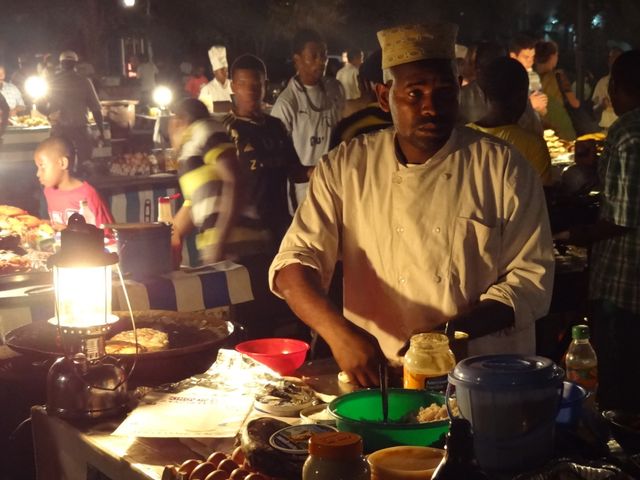
Forodhani Gardens is Stone Town's seafront street-food market, open each evening on the waterfront by the Old Fort. Vendors grill seafood and meat skewers, cook Zanzibar pizza to order, and press fresh sugarcane juice. Walking in is free; a light meal runs about US$3 to 8 (2026, verify). Order from the busiest stalls, eat what is cooked in front of you, and agree the price first.
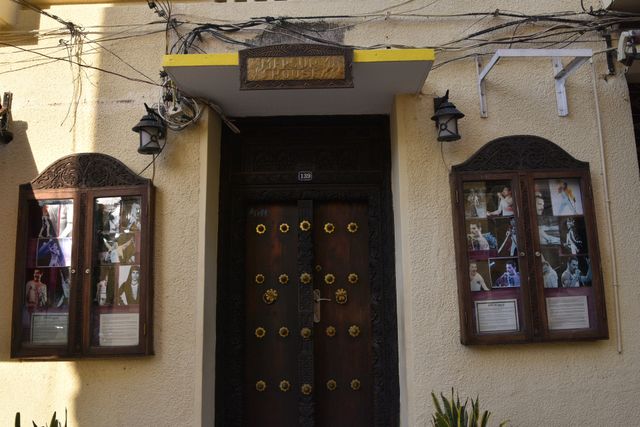
Freddie Mercury's house in Stone Town marks the Queen frontman's Zanzibar birthplace, now a small private museum on Kenyatta Road. Expect a handful of rooms of photos, record sleeves and his childhood story, not a big production. Entry is about US$10 for adults and US$6 for children (2026, verify); most people spend 20 to 30 minutes. Worth it for Queen fans, easy to skip if not.
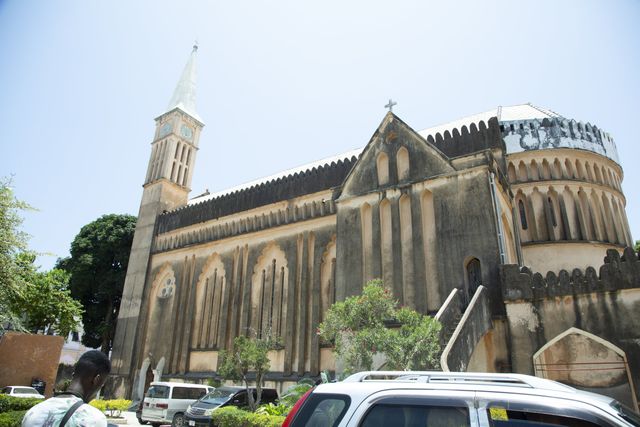
The Old Slave Market in Stone Town stands on the site of East Africa's largest 19th-century slave market. The Anglican Christ Church Cathedral was built over it to mark the trade's end. You can visit the cathedral, a memorial sculpture, an exhibit on the slave trade and the underground holding cells. Entry is about US$5 per adult (2026, verify); allow about an hour. A sobering, essential visit.